On Human Rights Defenders Day, Indigenous women urge the UK to act
Today, on Human Rights Defenders Day, two Indigenous women human rights defenders from Mexico and West Papua are in the UK calling for stronger government action to protect frontline land and environmental defenders and to ensure UK-linked companies are held accountable for harms connected to their operations and supply chains.
Their visit comes amid escalating global violence. According to Global Witness, 2024 was the deadliest year ever recorded for land and environmental defenders, with 324 people killed or disappeared. Indigenous peoples, who protect some of the world’s most biodiverse territories, remain among the most targeted.
The UK Government is preparing to publish revised guidance for its embassies and diplomatic missions on supporting human rights defenders. Peace Brigades International UK (PBI UK) and other civil society organisations are urging ministers to ensure the update strengthens, rather than weakens, political, diplomatic and practical support.
Mexico: violence, displacement and UK-linked mining interests
Claudia Ignacio Álvarez, a Purépecha feminist, lesbian and environmental defender from Michoacán, was forced to leave her community due to intensifying threats, armed intimidation and disappearances targeting those resisting land dispossession and illegal logging.
In recent weeks, the violence struck her own family. Her 24-year-old niece, Roxana Valentín, died after being injured during a peaceful demonstration in Santa Fe. The tragedy has deepened fear and grief within the community and highlights the growing risks faced by young women engaged in peaceful civic action.
Claudia works with the PBI-supported Red Solidaria de Derechos Humanos, helping communities defend forests, water and communal lands from organised crime and extractive interests. Some of the most dangerous cases involve confrontation with mining companies that have UK-linked structures or operations.
These include the disappearance and murder of Eustacio Alcalá Díaz in April 2023 after he halted concessions held by ArcelorMittal and Ternium, and the disappearance of Ricardo Lagunes Gasca and Antonio Díaz Valencia in January 2023 after challenging Ternium’s operations.
While Ternium denies involvement, the UN Working Group on Enforced Disappearances has requested its cooperation, and the Business and Human Rights Resource Centre has recorded multiple attacks on defenders who have raised concerns about the company’s activities.
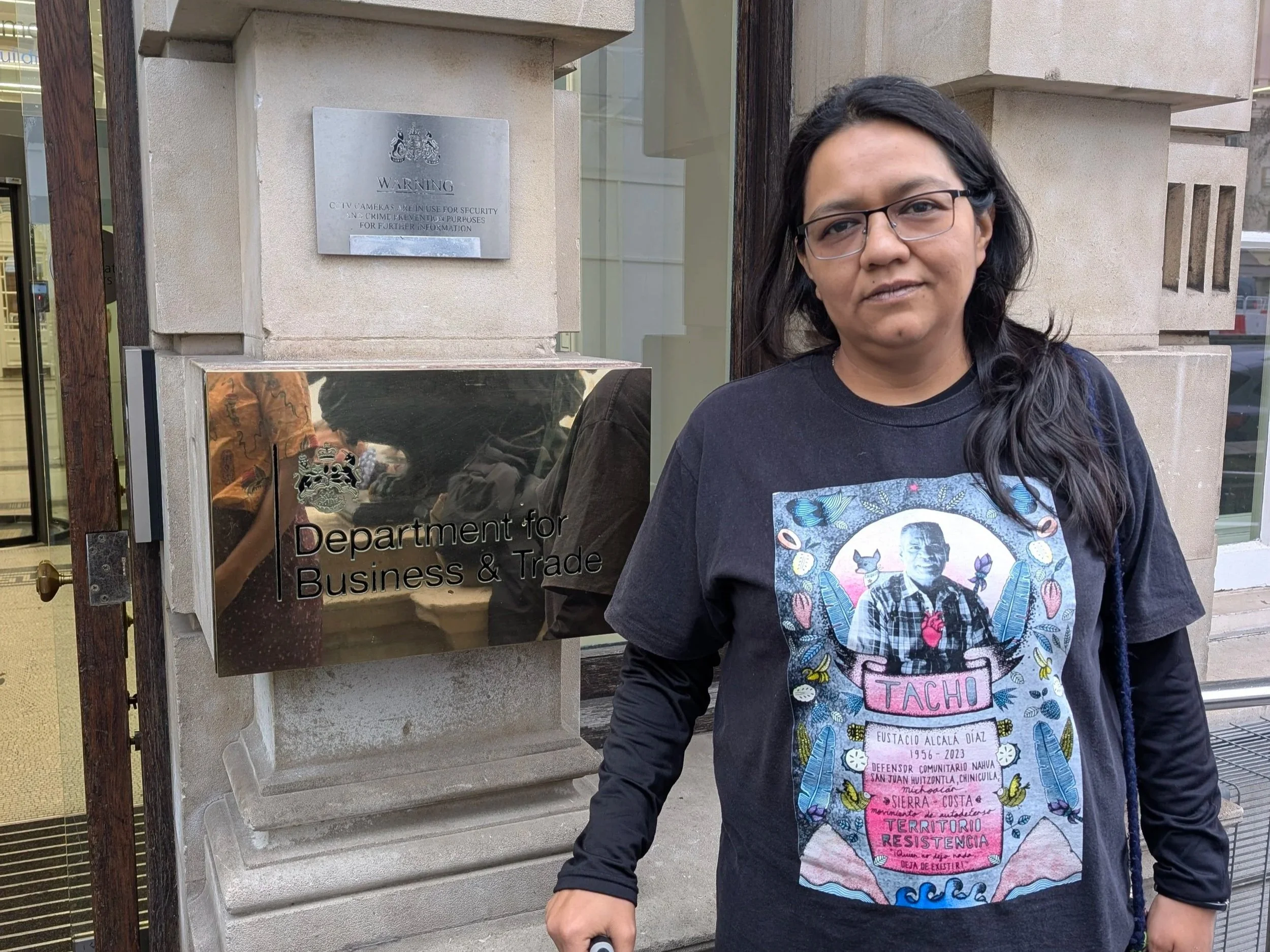
Claudia says:
“Indigenous communities in Michoacán defend forests and water for the benefit of everyone, yet we are met with threats, disappearances and deadly violence. The killing of my niece Roxana shows how speaking out can cost us everything. The UK has influence over companies and policymakers, and we need it to help end impunity. Without justice, the violence will only grow.”
Claudia Ignacio Álvarez, a Purépecha feminist, lesbian and environmental defender from Michoacán, Mexico.
West Papua: militarisation, land grabs and UK-linked extractive projects
Lia Yewen, an Indigenous Miyah woman defender, works to protect her ancestral land in West Papua, a region of extraordinary biodiversity under sustained military control. Papuans who resist land grabs face surveillance, harassment, criminalisation and, in some cases, fatal attacks.
Indonesia’s National Strategic Projects have allocated vast areas of Indigenous land to palm oil, mining and industrial agriculture without Free, Prior and Informed Consent. In Merauke alone, tens of thousands of hectares have been designated for industrial projects, with the programme recently expanded into South Papua. These developments are often accompanied by military operations, displacement and serious human rights violations.
UK-linked business interests and security cooperation play a significant role in shaping these conditions. In Bintuni Bay, part of one of the world’s largest intact mangrove forests, BP’s Tangguh LNG project has long faced criticism for its impact on Indigenous land rights, ecosystems and community cohesion. BP earns more than £2 billion a year from Tangguh and maintains close links with security forces implicated in abuses. A heavy security presence and selective compensation processes have increased risks for communities and activists.
The UK also continues to supply arms and military training to Indonesia despite longstanding concerns that they may be used in internal repression. UK investors hold major stakes in extractive sectors across Papua, including Freeport-McMoRan’s Grasberg mine, one of the most environmentally damaging mining projects in the world, and palm oil companies driving deforestation across the region.
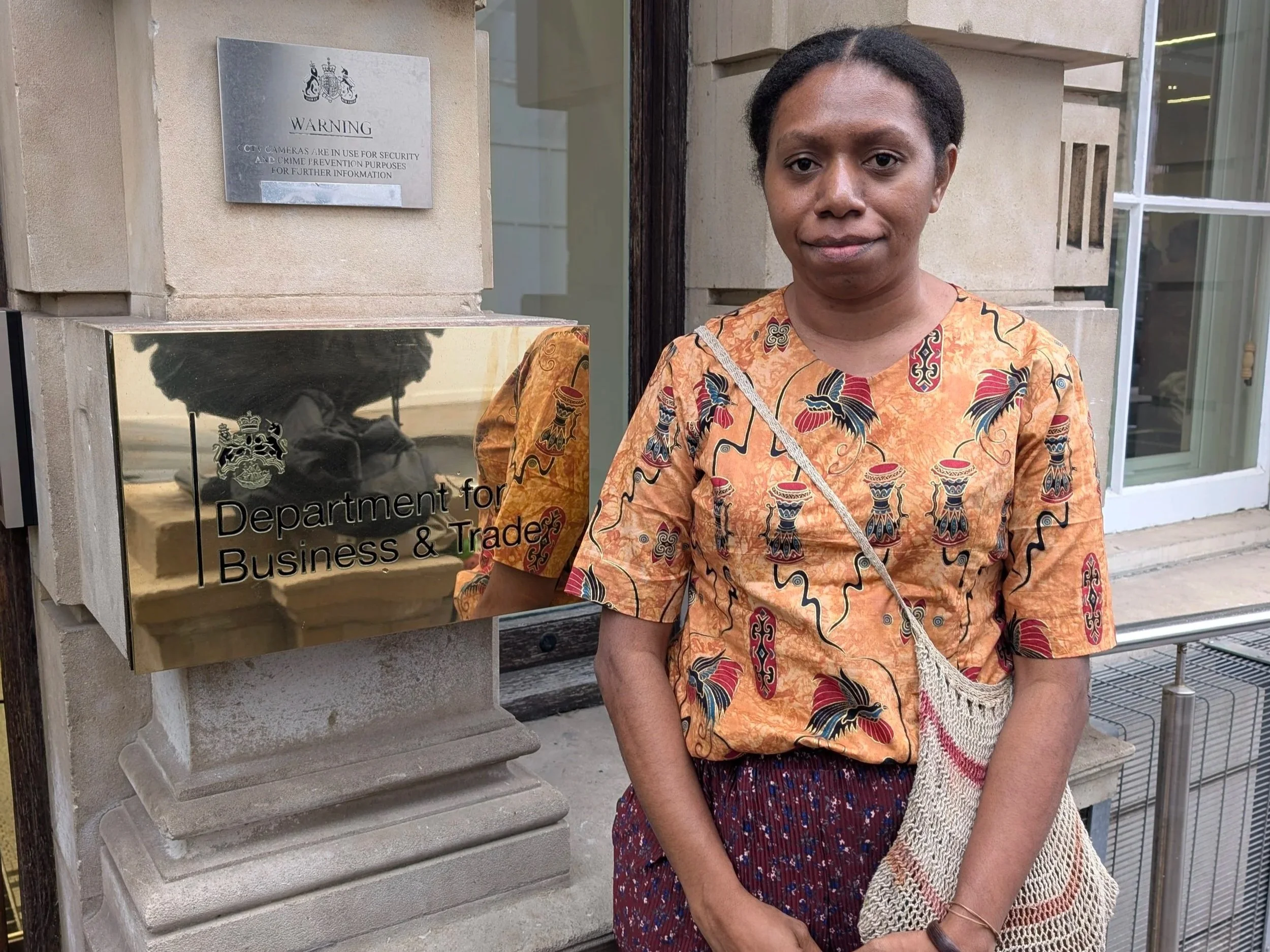
Lia explains:
“In West Papua, we live under militarisation simply for defending forests and rivers that are vital to global biodiversity. While BP and UK investors profit, our environment is being torn apart and our communities suffer. The UK cannot claim to support climate action while enabling the destruction of one of the world’s most important ecosystems.”
Lia Yewen, an Indigenous Miyah woman defender, works to protect her ancestral land in West Papua
PBI UK urges the Government to:
• strengthen, not dilute, guidance for diplomatic missions on supporting human rights defenders
• require mandatory human rights and environmental due diligence for all UK-linked companies
• hold corporations such as BP, ArcelorMittal and Ternium accountable for harms connected to their global operations
• raise cases of killings, enforced disappearances and attacks with Indonesian and Mexican authorities
• engage directly with Indigenous and women defenders, pressing Indonesia and Mexico to end militarisation, forced displacement and violations of Free, Prior and Informed Consent
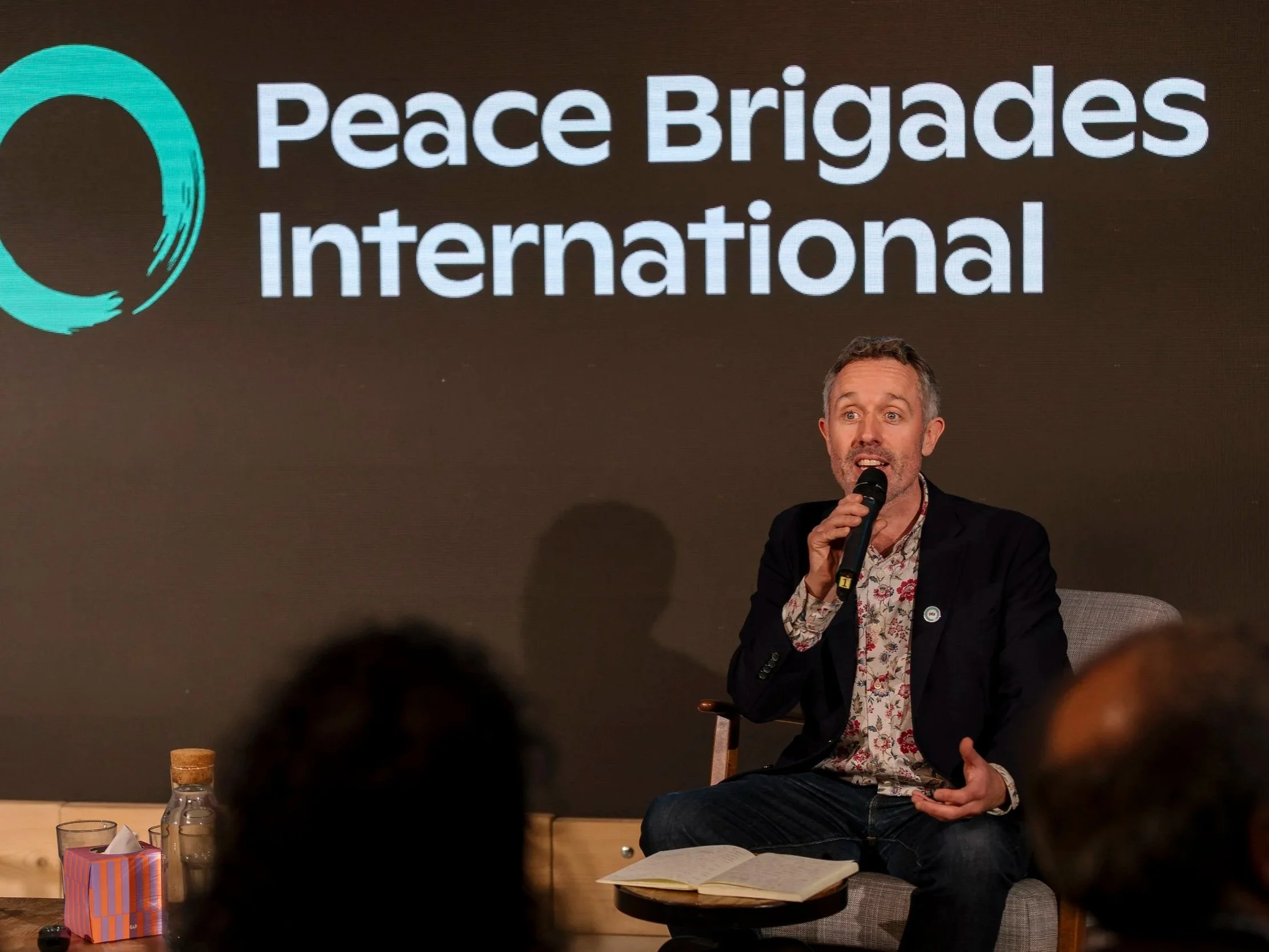
Ben Leather says:
“Indigenous women are leading the defence of forests, rivers and the climate, yet they face extraordinary risks. From Mexico to West Papua, land grabbing and militarisation are rising. The UK must ensure its companies do no harm and use its diplomatic power to protect those defending land, identity and human rights. Concern is not enough. The UK must act.”
Ben Leather, Director of PBI UK