Colonialism in Our Time: Papuan defenders bring their fight to London
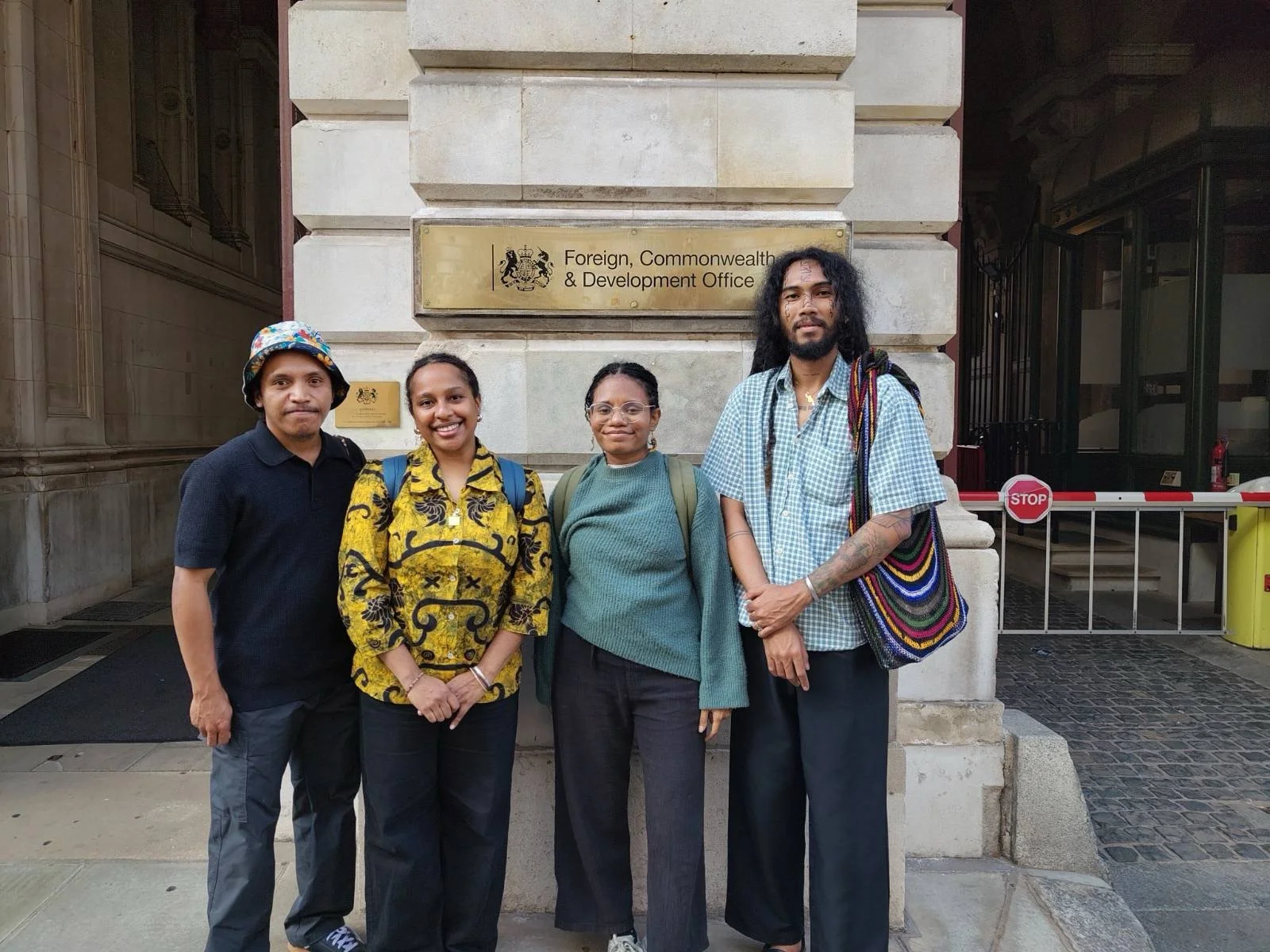
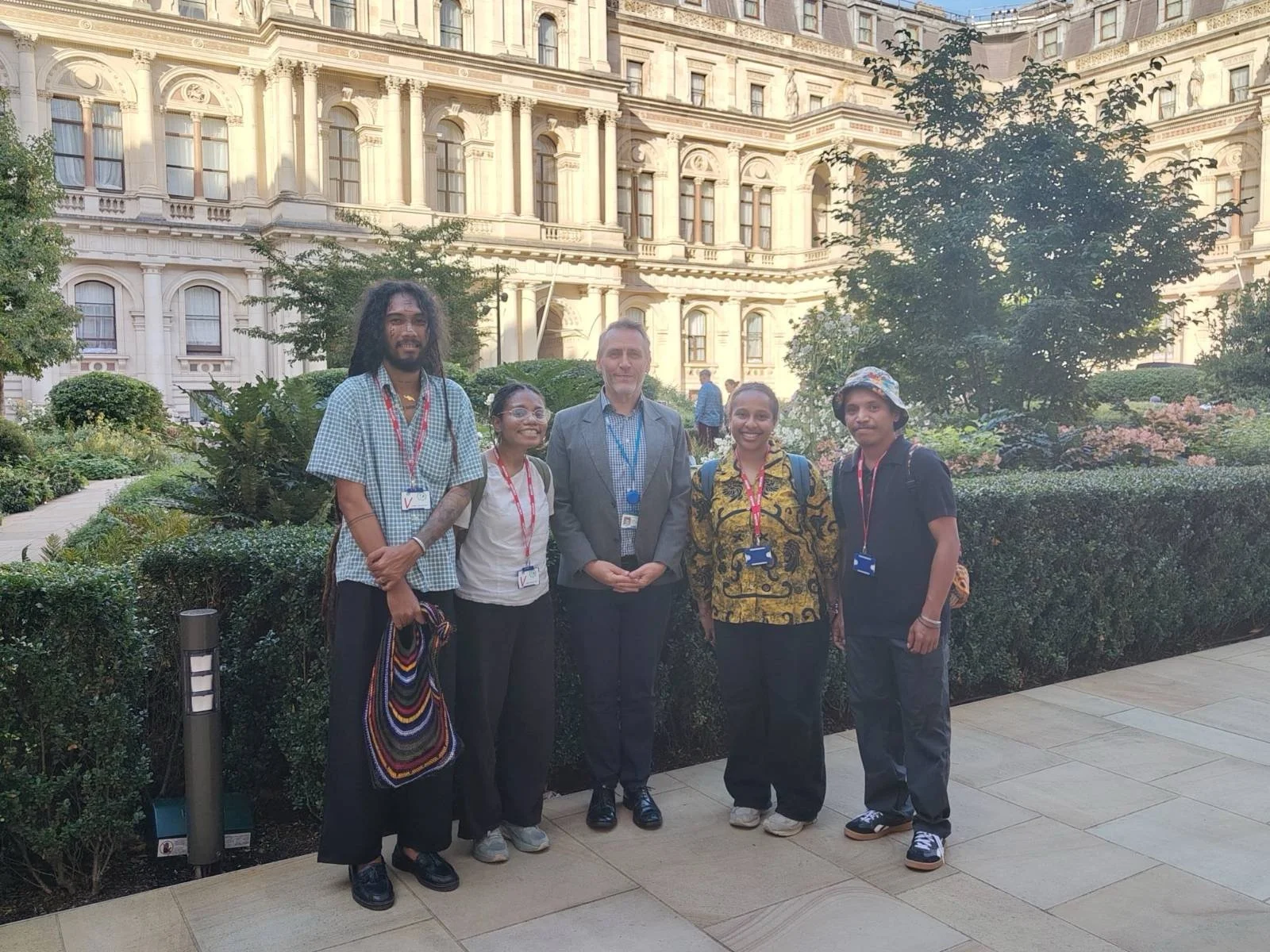
Last month, PBI UK welcomed a five-person delegation of Indigenous human rights defenders, journalists and artists from West Papua to London as part of their EU and UK advocacy tour. Their week included a screening of the documentary 'Pesta Babi: Colonialism in Our Time', meetings with UK officials and a gathering with civil society allies.
The delegation included: Defe of PUSAKA; journalist Aida of JUBI Media; Gege of Sa Perempuan Papua; and artists and activists Costan and Glenn. Together they work on land rights, press freedom, women's rights and the preservation of Papuan culture.
During their time in London, the delegation spoke out about the South Papua National Strategic Project (NSP), a state-backed food and energy mega-project described by the Financial Times as the 'world's largest deforestation project'. PBI UK worked alongside other CSOs to open doors to decision-makers, allies and the public so that the defenders could speak about the impacts of this project.
The South Papua NSP is clearing land for palm oil, sugarcane and rice across more than two million hectares, backed by Indonesia's Ministries of Defence and Agriculture and carried out by the military. Mighty Earth estimates that almost 49,000 hectares of rainforest, savannah and wetland have been cleared since late 2024, and an estimated 50,000 Indigenous Papuans have been displaced. If fully implemented, the project could double Indonesia's carbon emissions. Nine UN Special Rapporteurs raised concerns about the project in 2025. Yet Indonesia has no unified Indigenous peoples' rights law, so most communities have no legal recourse when businesses encroach on their land.
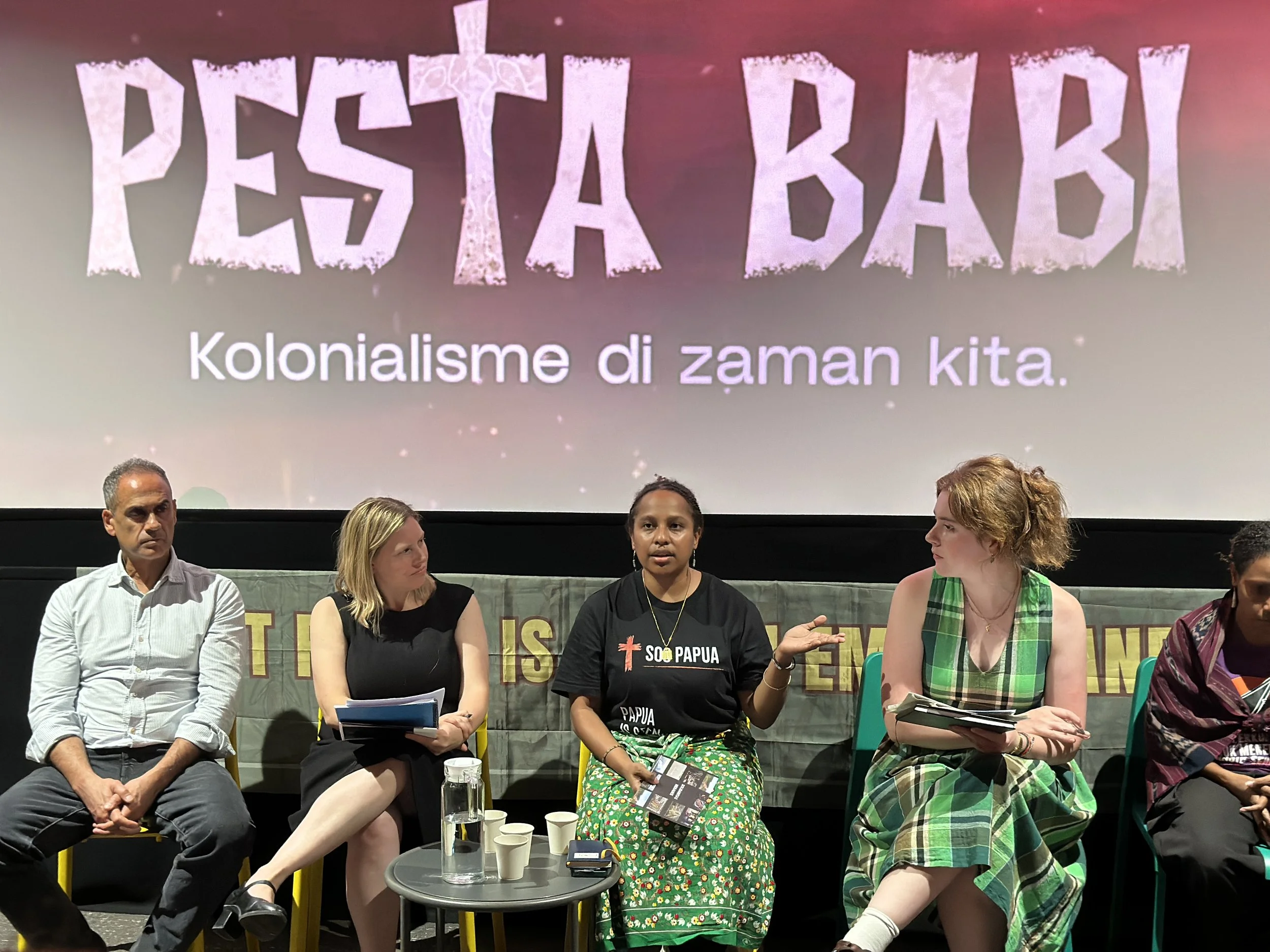
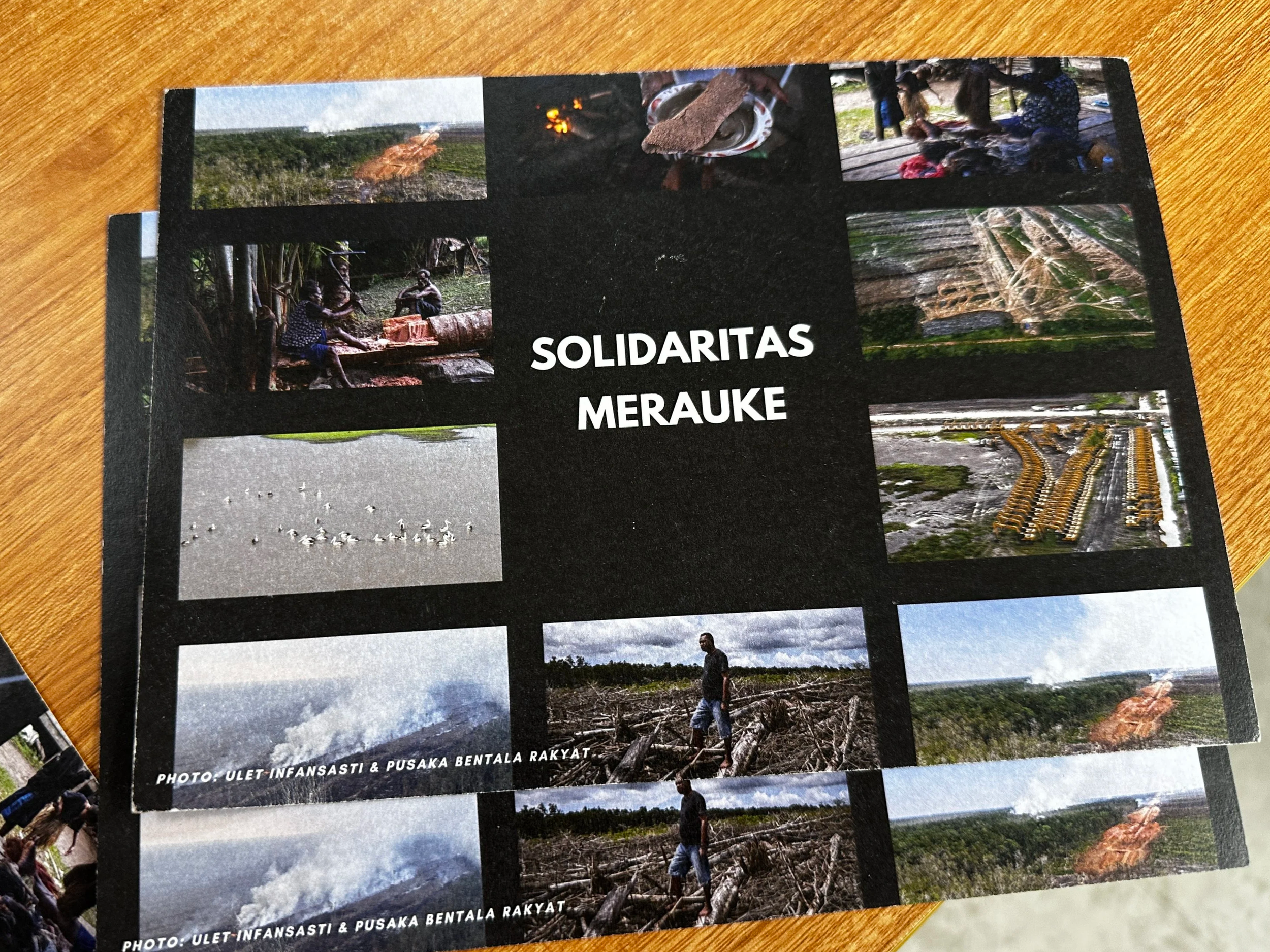
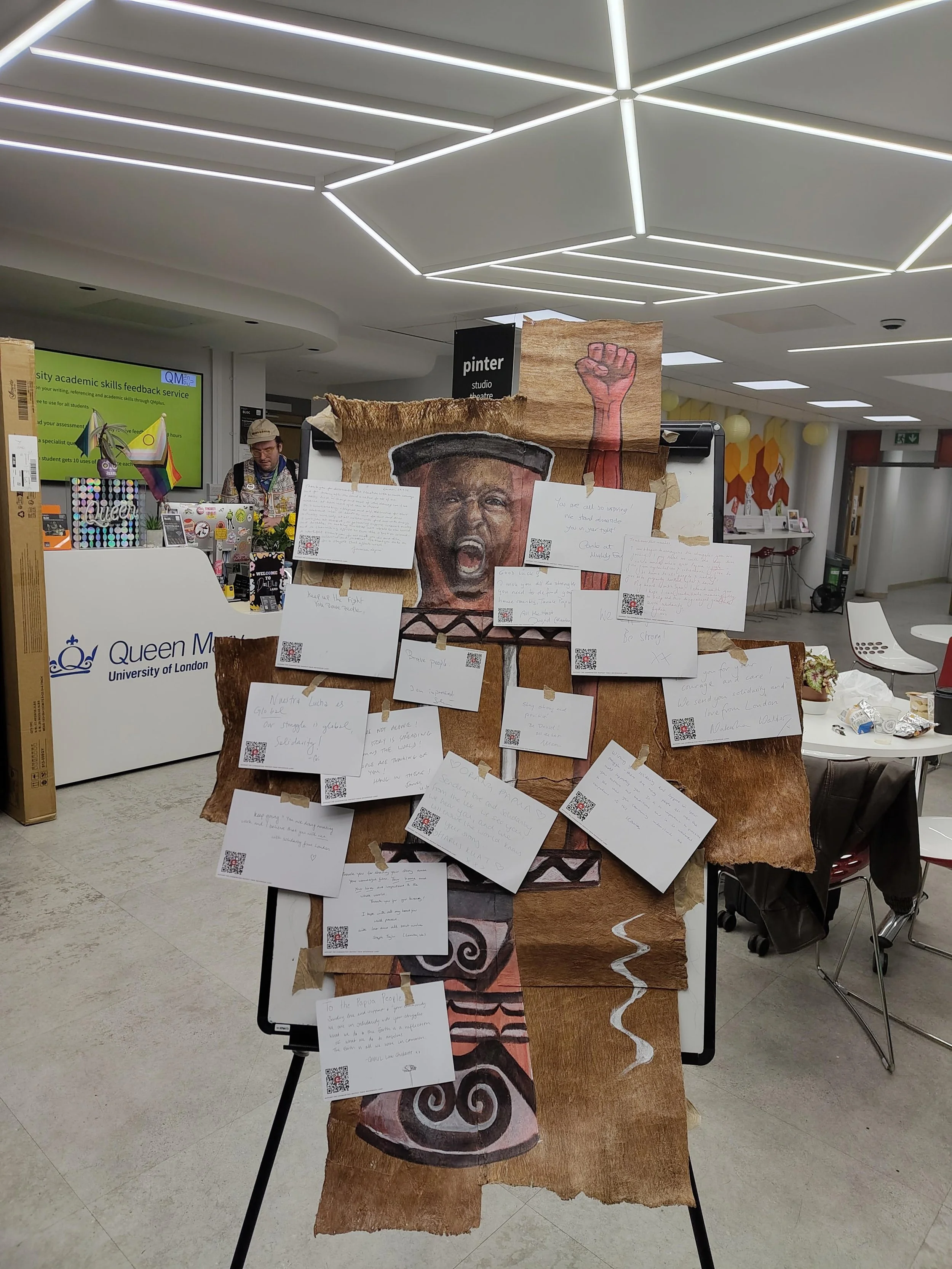
Defe Speaking at the Film Screening of Pesta Babi Postcards from a conference in Merauke in March 2025 A replica of a Kandara
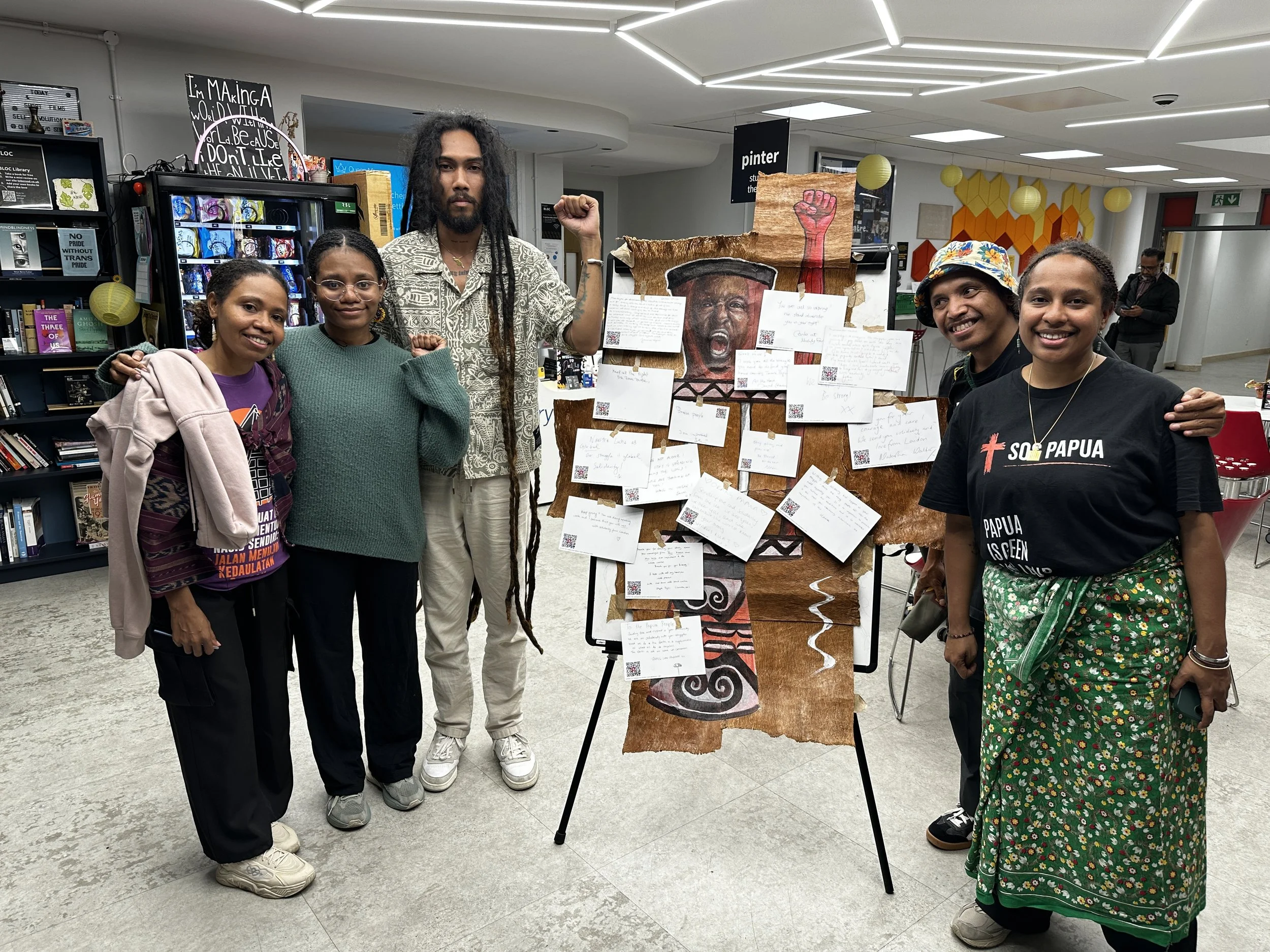
The Papuan Delegation stand with a replica of a Kandara
'Pesta Babi': an exclusive London screening
On the 29th September, we gathered at Queen Mary University of London (QMUL) for an exclusive screening of 'Pesta Babi: Colonialism in Our Time', co-hosted by People's Palace Projects, QMUL's Centre for Climate Crime and Climate Justice, Mighty Earth and PBI.
Pesta Babi was produced by Jubi Media in collaboration with Watchdoc, Ekspedisi Indonesia Baru, Pusaka, Green Peace Indonesia, and LBH Papua Merauke. The award-winning film documents the peaceful resistance of Indigenous communities in Merauke, who are marking their ancestral lands with red crosses to stop bulldozers that are often operated by soldiers. In Indonesia, screenings have reportedly been interrupted or cancelled by authorities and military personnel, but community-led screenings continue.
The evening opened and closed with music from Costan and Glenn. sharing their Papuan culture. Chaired by Florence Jones news editor of The ENDS Report, the panel brought together Defe, Aida and Angela Sherwood, Co-Director of QMUL's Centre for Climate Crime and Climate Justice. Defe, Aida and the wider delegation spoke passionately about the challenges they face, and about why international attention and support matter.
Outside the cinema stood a replica of a Kandara, a drum used by the Malind people to mark celebrations or to sound an alarm. The original Kandara painting on tree bark was part of an installation by the Udeido Collective at the Solidaritas Merauke conference in Merauke in March 2025, where people shared how it feels to be a victim of land grabbing and sounded an alarm about what is happening there. This Kandara carried that alarm to the UK and became a symbol for international solidarity. Defending the forest takes enormous energy, especially against a system backed by militarisation, so after the film, audience members left messages of support for the Indigenous community, showing that their fight is seen and supported from London.
Speaking to decision-makers and allies
Meeting with the FCDO and the Department for Business and Trade
The delegation met Gareth Wynn Owen, the Foreign, Commonwealth and Development Office (FCDO) desk officer for Indonesia and a member of the Responsible Business Conduct team at the Department for Business, Innovation, Science and Trade (DBIST).
During the meeting, the delegation explained the current legal system that leaves Indigenous land unprotected in West Papua. Only seven communities in West Papua have formal recognition, and unmapped land is treated as 'empty'. In Merauke, fertiliser has poisoned water sources, cutting communities off from their livelihoods and food.
Gege presented her research on sexual violence by military personnel in South Papua, which documents 44 specific cases and a pattern stretching back to 1961. Of more than 90 cases recorded overall since 2021, only one has reached a military court. Gege also raised concerns about UK training of the Indonesian military.
The delegation asked the UK to raise the situation in West Papua, particularly the South Papua NSP, at Indonesia's Universal Periodic Review in 2027 and at the UN Human Rights Council in March 2027, to use the new Strategic Partnership between the UK and Indonesia as leverage, and to urge Indonesia to welcome an official UN visit.
Meeting with civil society allies
On the last day of their UK visit, the delegation joined a closed gathering hosted by Leigh Day for NGOs, donors, academics and journalists. Each delegate presented their work, from raising concerns about the NSP and press freedom, to cultural protection and sexual and gender-based violence, followed by a Q&A that connected allies directly with the defenders.
What part is the UK playing?
This year the UK deepened its relationship with Indonesia through the UK–Indonesia Strategic Partnership, which includes commitments for both countries to uphold human rights and environmental protections. The delegation urged the UK to put those commitments at the forefront, including when it considers Indonesia's applications to the Organisation for Economic Co-operation and Development (OECD) and the Comprehensive and Progressive Agreement for Trans-Pacific Partnership (CPTPP).
A 2025 report by QMUL's Centre for Climate Crime and Climate Justice, 'Bringing it all back home: the role of British companies in the destruction of West Papua', links UK financial institutions and corporations, including Barclays, HSBC and Legal & General, to deforestation, mining and gas production in Papua.
Here's how you can support PBI and environmental defenders at risk:
Watch and share 'Pesta Babi'. The film is free to watch on YouTube. Share it with friends, colleagues and your networks.
Read the report: Find out how UK finance and business are connected to the destruction in Papua in QMUL's 'Bringing it all back home'.
Write to your MP: Ask them to raise West Papua with the government and to support a UK law holding companies accountable for human rights and environmental abuses.
Sign the petition: Pledge your support for a UK Business, Human Rights and Environment Act
Stay in the loop: Sign up to the PBI UK newsletter for updates, future events and ways to take action.
Support Defenders at Risk: Donate to Peace Brigades International to help us continue our support of frontline environmental defenders.