By Lorna Ní Shúilleabháin, Partnerships and Policy Officer
Last week, PBI UK welcomed Dorothy Cheruto, an Ogiek Indigenous rights defender from Kenya, to the UK for a week of roundtables, lobbying and meetings. Dorothy was joined by human rights defenders and community representatives from Brazil, Guatemala, Turkmenistan and Türkiye, as part of a speaker tour hosted by members of the Corporate Justice Coalition (CJC) calling for a UK Business, Human Rights and Environment Act (BHREA). Together they shared first-hand experience of corporate harm with academics, civil society, parliamentarians and government officials.
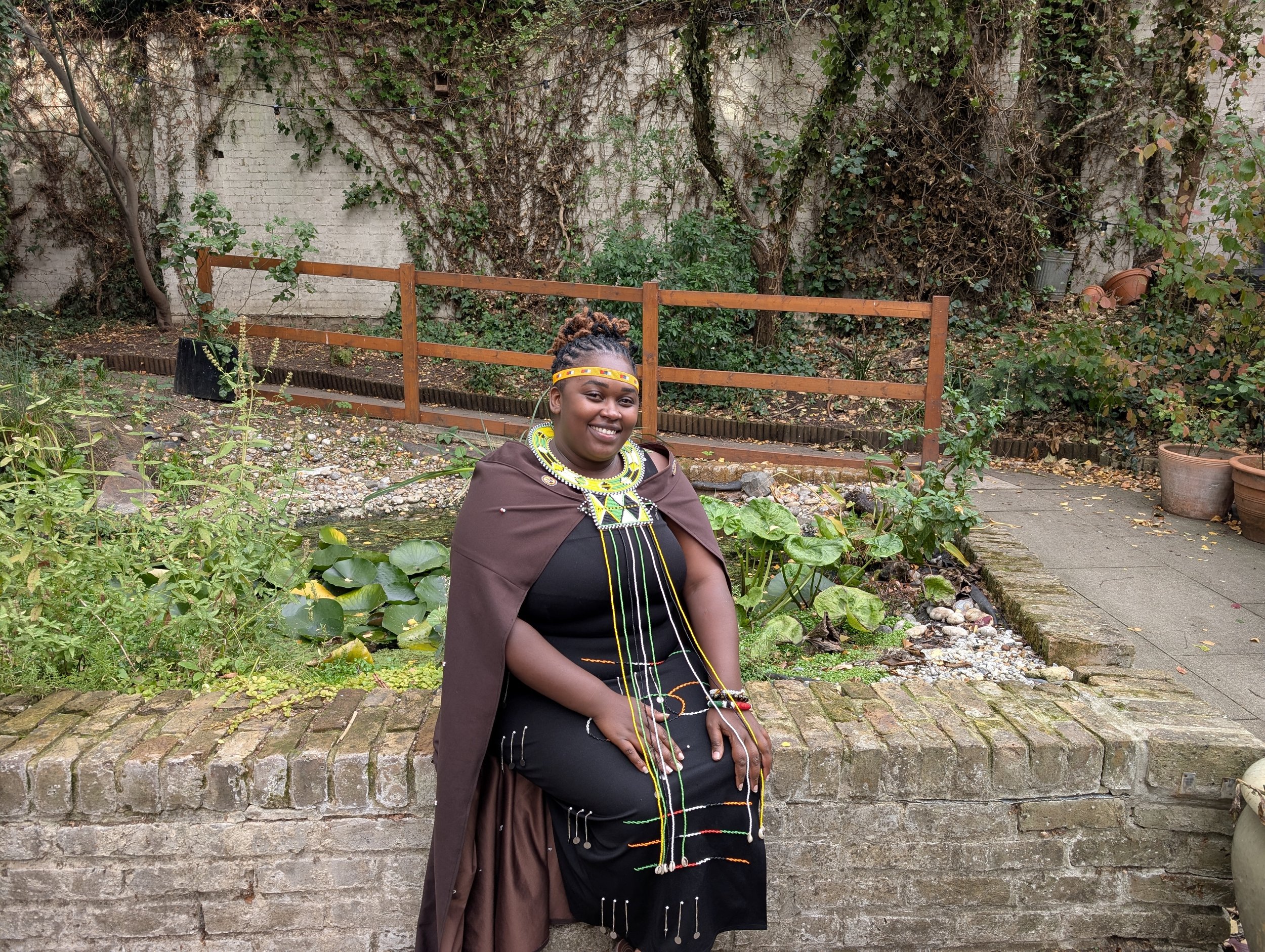
Dorothy Cheruto is an Indigenous human rights defender from the Ogiek community of Kenya and a development practitioner committed to advancing Indigenous Peoples' rights, environmental justice, gender equality, and community-led conservation. She serves as an Assistant Gender Officer at the Ogiek Peoples' Development Program (OPDP) and as the Project Coordinator of the Hunter Gatherer Forum–Kenya (HUGAFO-K), a national network representing Indigenous hunter-gatherer communities across Kenya. She has contributed to advocacy supporting the implementation of the landmark African Court on Human and Peoples' Rights judgments (2017, 2022 and 2025), which affirmed the Ogiek people's collective rights to their ancestral lands in the Mau Forest and awarded reparations for decades of human rights violations.
Dorothy was joined by the following defenders, who were invited by their UK partner organisations:
Ruslan Myatiev, founder and editor of Turkmen.News, an independent media and human rights organisation reporting on Turkmenistan, spoke about abuses in its cotton industry. Invited by Anti-Slavery International.
Francisca Paz represents ACA Associação Camponesa in Balsas, in Brazil's soy-producing state of Maranhão, where land disputes and illegal deforestation are linked to agribusiness. Invited by Earthsight.
Özlem Temena Meral is an independent journalist in Türkiye investigating supply chains and labour rights in the textile industry, where factories supply major European, British and US brands. Invited by Labour Behind the Label.
Four defenders from Guatemala, including: Lisbeth Gutiérrez of the Xinka People's Parliament; José Amilvar Urías Sanchez, Huxi Hurak of the Xinka People; Ramona Margarita Domingo Díaz, a Popti' Maya woman from Jacaltenango, and; Uriel Gonzalo Miranda Feliciano, Director of the Peace and Ecology Commission Association (COPAE). Invited by Trócaire.
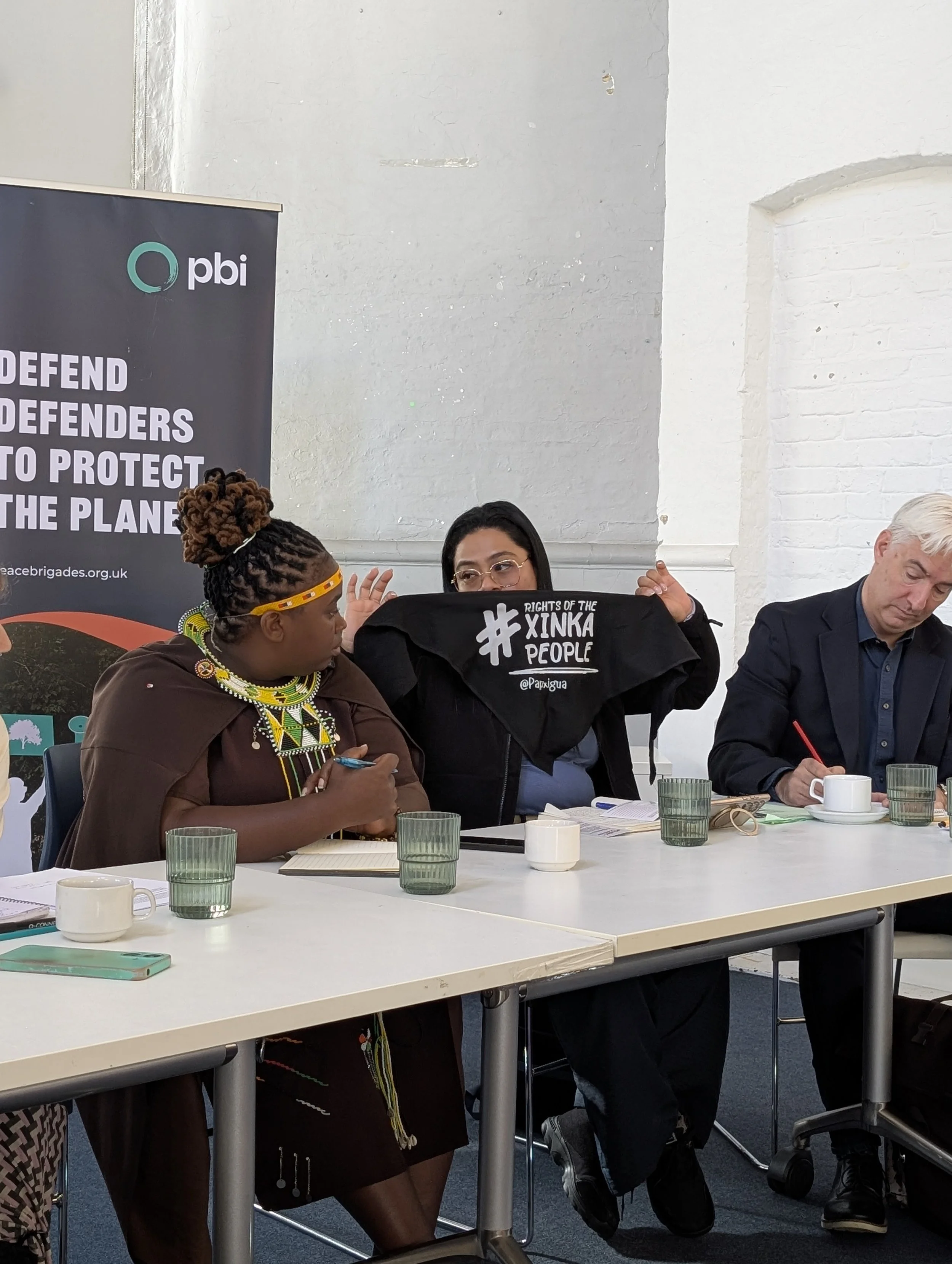
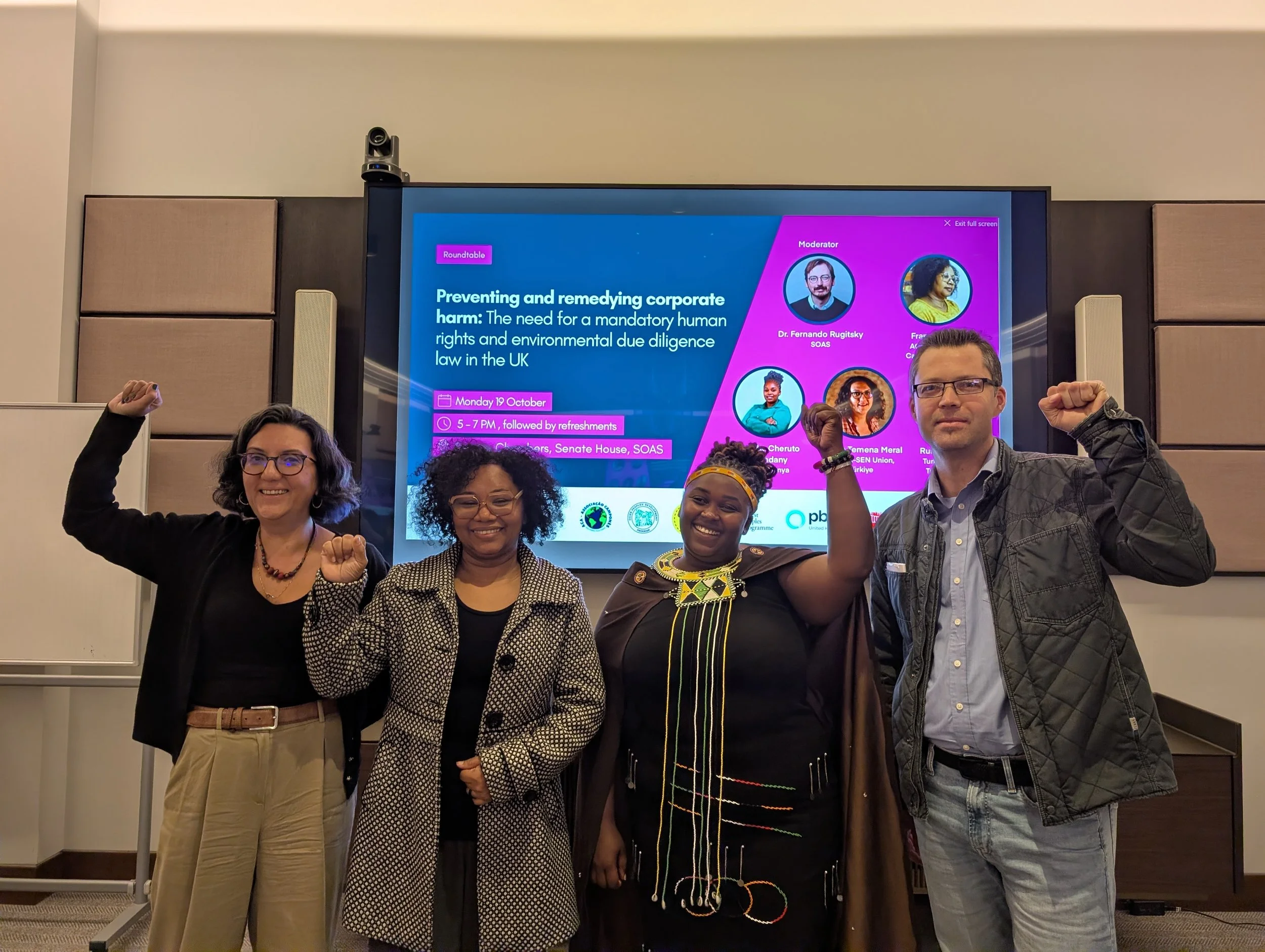
The delegation at the Academic roundtable at SOAS. From left to right: Özlem Temena Meral, Francisca Paz, Dorothy Cheruto and Ruslan Myatiev.
Academic Roundtable at SOAS
At the beginning of the week, SOAS University of London convened a roundtable and reception at Senate House, bringing the defenders together with UK-based academics.
Dr Yannis Dafermos gave opening remarks and Dr Fernando Rugitsky moderated, and Luise Schroter from the CJCJ set out the policy picture. Academics asked what must happen beyond company reports and certification. Dorothy was clear: certification is never enough. She described carbon project developers asking communities to sign forms, sometimes disguised as attendance sheets, that sign away their land, with no free, prior and informed consent and contracts not written in the community's language. Contracts can run for 40 to 50 years, so communities are signing for their children. Dorothy’s asks were that contracts should be reassessed every two years, and communities should give real free, prior and informed consent.
Speaking to Decision-Makers and Allies
Meeting with Government Departments
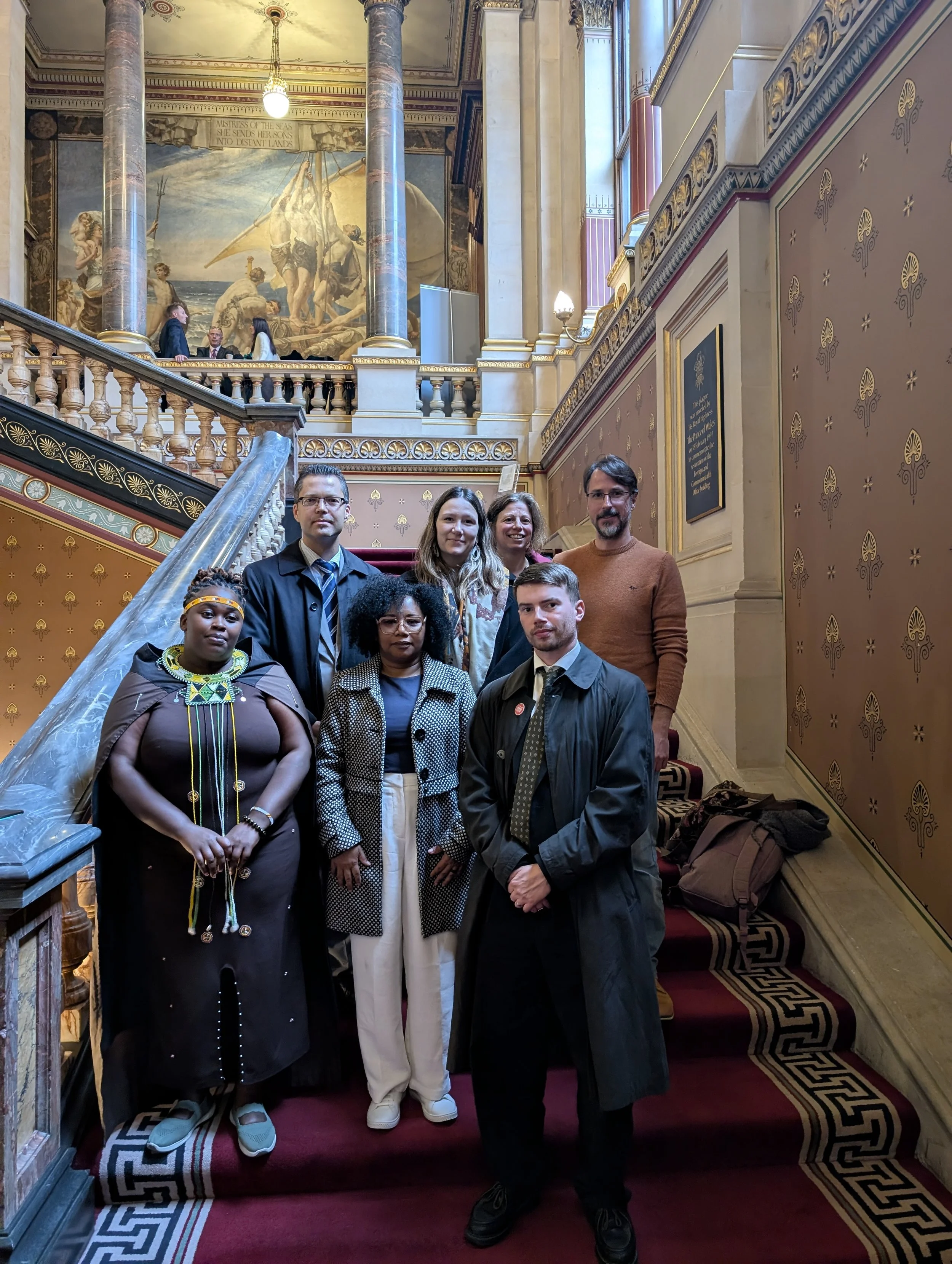
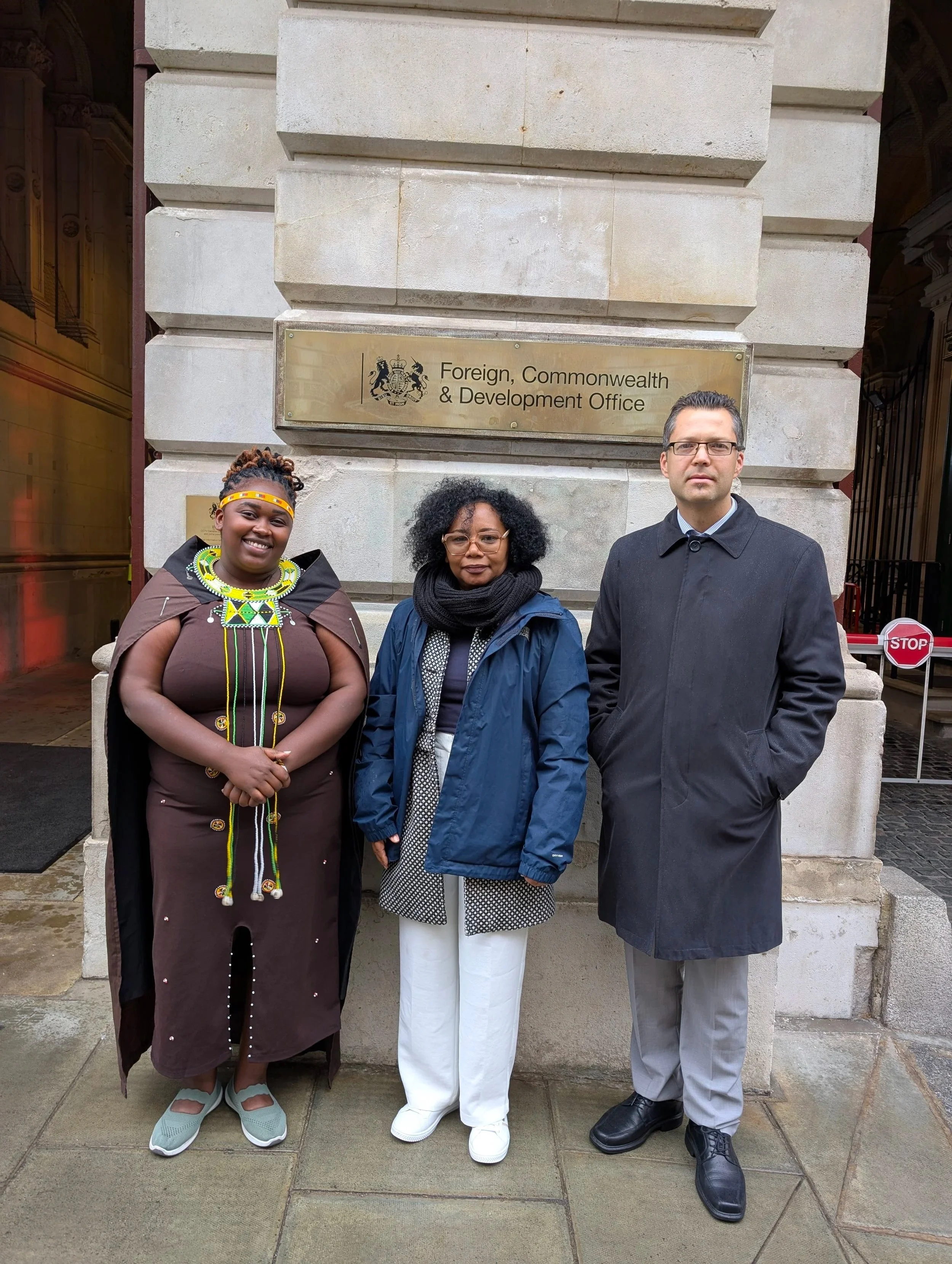
The defenders met with country desk officers and thematic leads working on business and human rights, civic space, and deforestation from the Foreign, Commonwealth and Development Office (FCDO), the Department for Business, Innovation, Science and Trade (DBIST) and the Department for Environment, Food and Rural Affairs (DEFRA).
During the meeting, Dorothy called on the UK Government to urge the Kenyan Government to implement the judgments of the African Court on Human and Peoples’ Rights. She highlighted the lack of clear reporting mechanisms for communities affected by business activities, explaining that conservation projects often proceed without respecting local cultural protocols and leave communities without effective grievance mechanisms when problems arise.
Bringing Lived Experiences to Parliament
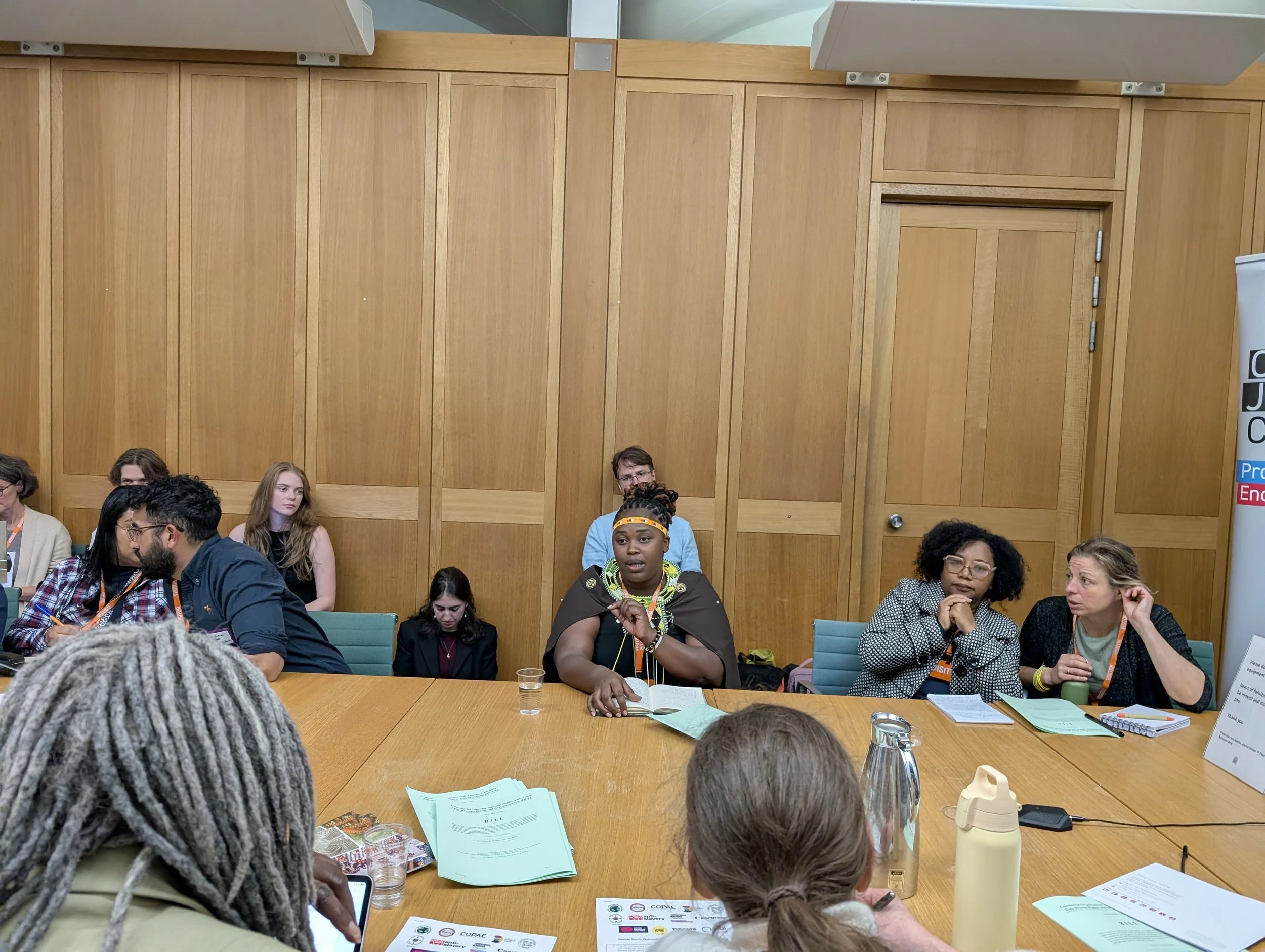
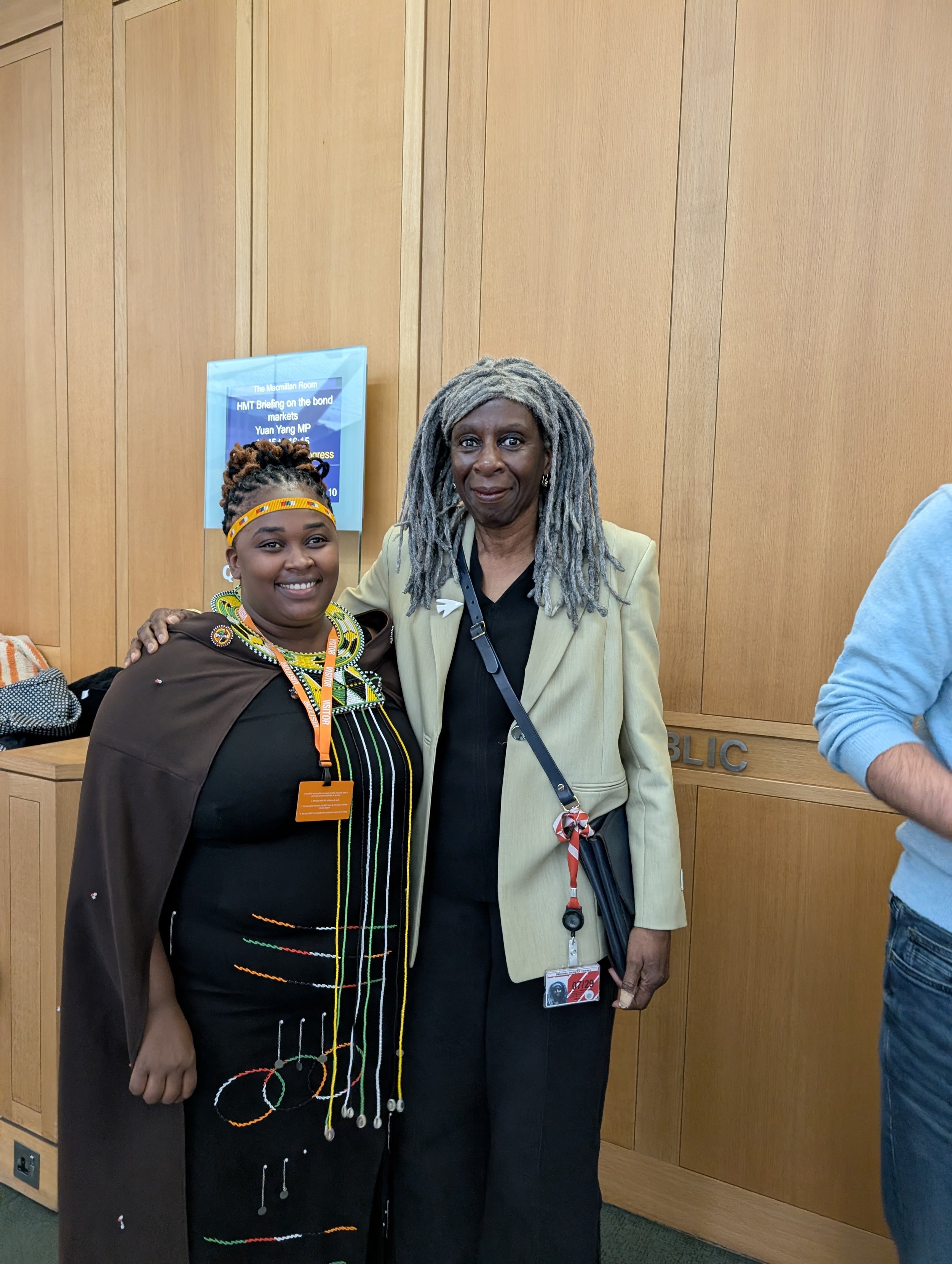
Dorothy, alongside the defenders from Brazil, Guatemala and Turkmenistan, then took her experiences into Parliament at a roundtable chaired by Baroness Lola Young of Hornsey. Each defender described what corporate activity means for their communities and the workers they represent, from the loss of ancestral lands and environmental destruction, to violations of workers' rights, and discussed how a BHREA could prevent harm before it happens, help affected communities access justice and hold businesses to account.
Baroness Young spoke about the Commercial Organisations and Public Authorities Duty (Human Rights and Environment) Bill she has introduced in the House of Lords, which is set for an upcoming second reading.
Solidarity in Practice: the Civil Society Workshop
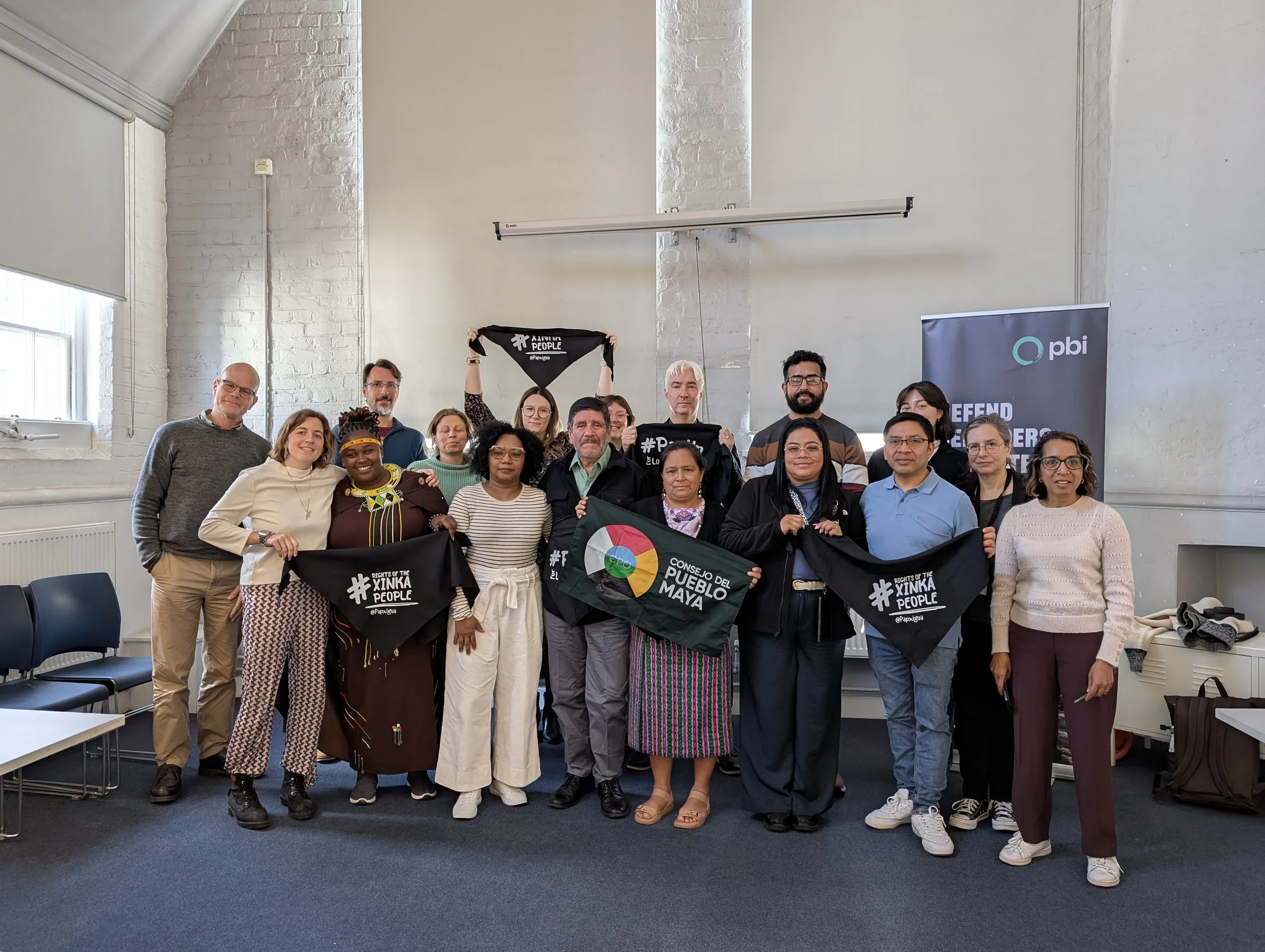
Civil society organisations gathered for a workshop with Dorothy, Francisca and the delegation from Guatemala, built around the question: what does meaningful solidarity with human rights defenders and their communities look like in practice?
Dorothy asked civil society to directly fund Indigenous-led conservation, support the Ogiek peoples’ own research and territorial mapping, back education projects, give the Ogiek peoples’ struggle visibility, and urge the Kenyan Government to implement the judgments of the African Court on Human and Peoples’ Rights.
Her final message was that the Ogiek community’s traditional knowledge of conservation be recognised, their perspectives matter, and the ask to ensure their voices are heard at decision-making tables. She also noted that UN agencies have never visited the Ogiek.
Mass Public Lobby Day of Parliament
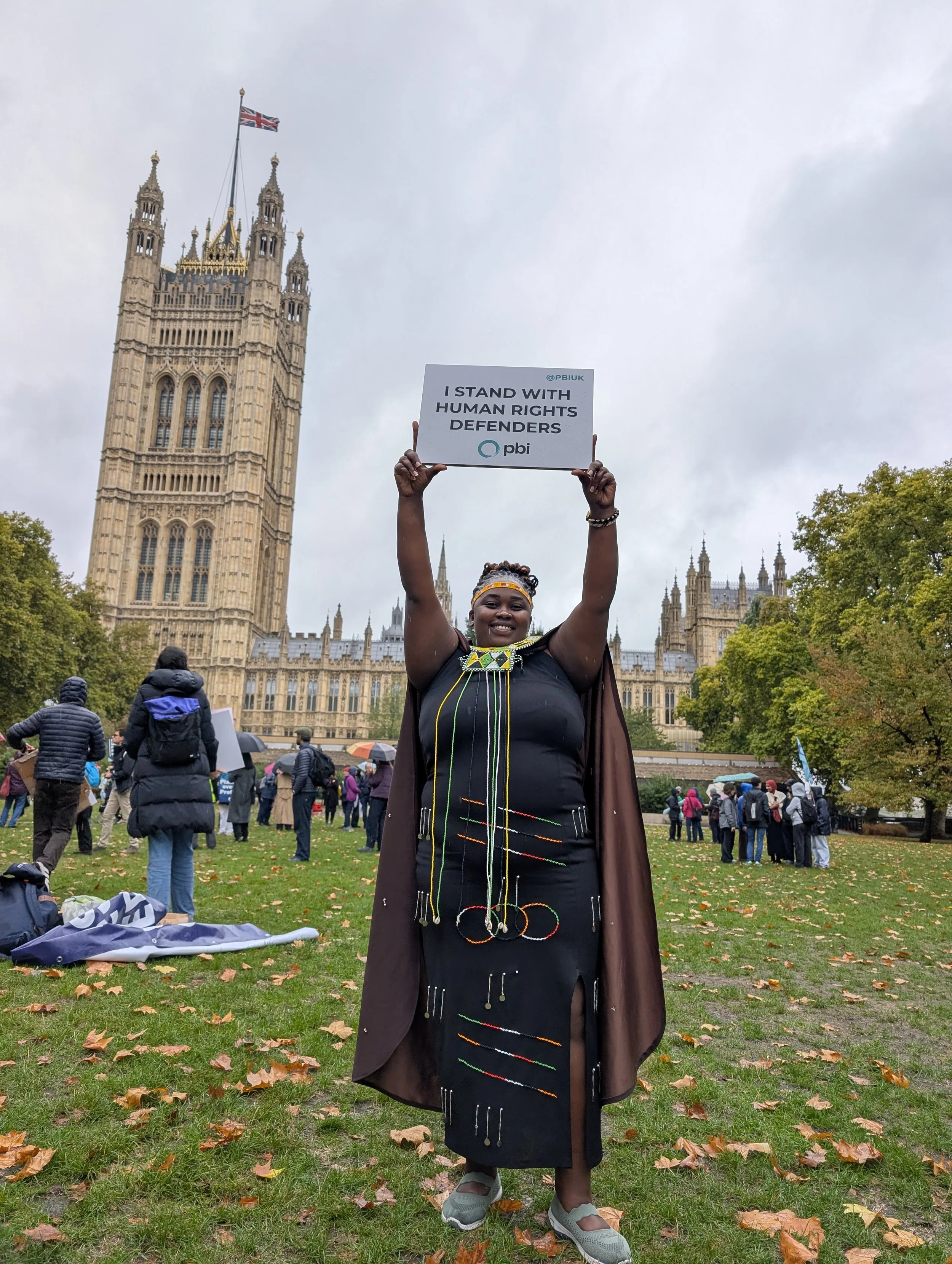
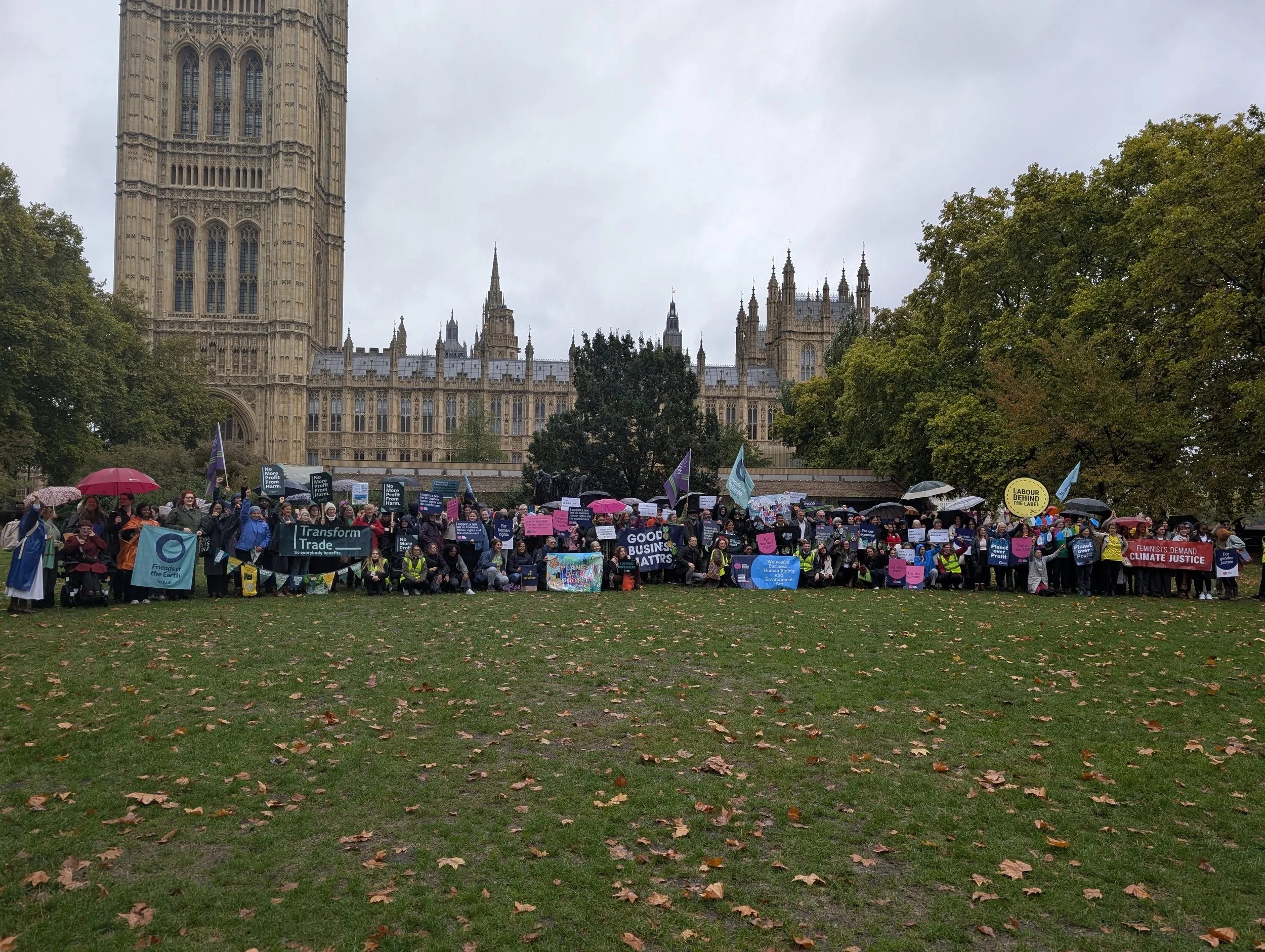
On Wednesday 21st October, the delegation of defenders joined campaigners and members of the public at the Good Business Matters Mass Lobby Day in Westminster, co-organised by the Corporate Justice Coalition and it’s member organisations such as Friends of the Earth, ActionAid, Amnesty International, Earthsight, Labour Behind the Label, PBI UK, UNISON and many more.
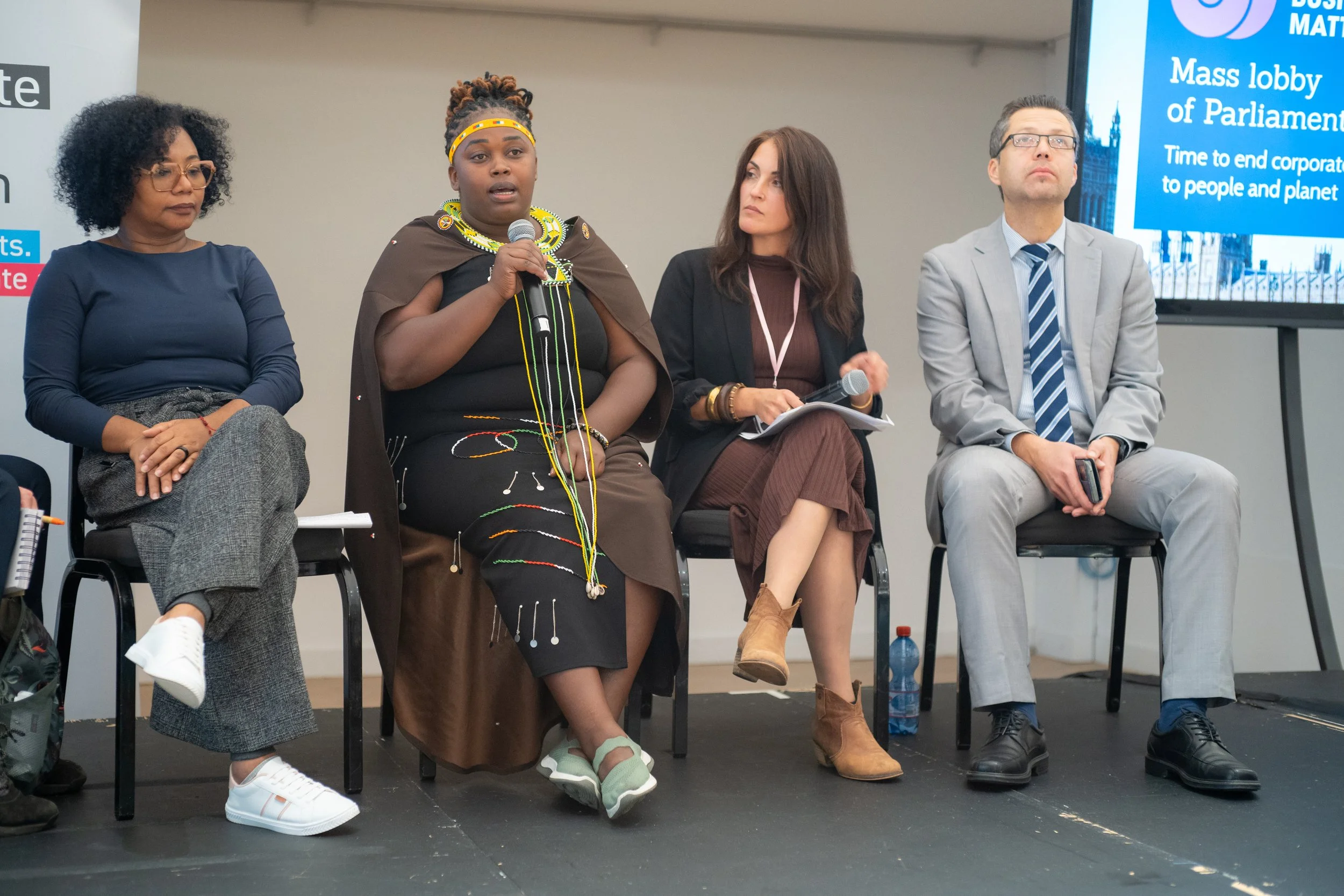
At the kick-off event at Central Hall Westminster, Co-Director of the CJC Eleanor Rosenbach moderated a panel discussion with Dorothy, Francisca and Ruslan. They shared their experiences of defending communities and workers affected by corporate activity, and why Indigenous and rural communities, workers and human rights defenders need protection from human rights abuses and environmental harm. Campaigners and members of the public then lobbied their MPs, asking them to sign the Good Business Matters pledge and support a BHREA that would hold UK companies legally responsible for preventing harm to workers, communities and the environment, in the UK and abroad.
The response was remarkable: 217 people attended and 135 MPs were either met with or green carded. Following the Mass Lobby Day, 100 Parliamentarians have now pledged their support for a new law. It was a great day, and wonderful to see so many people building momentum together.
New PBI UK Report: Overdue Diligence
Also on Wednesday 21st October, PBI UK launched its new report, Overdue Diligence: Why human rights defenders still need a UK law on mandatory due diligence. It updates five cases of reprisals against defenders protesting extractive and renewable energy projects with links to UK companies or investors, first featured in our 2024 report, The Case for Change. It finds that human rights and environmental conditions in key communities continue to deteriorate, while UK businesses have failed to prevent, address or remedy harm.
The report comes amid growing erosion of respect for human rights globally. Organisations have documented 332 attacks on human rights defenders connected to UK companies between 2015 and 2026, including 30 murders. Furthermore, 124 land and environmental defenders were killed in 2025 alone for protecting their land and livelihoods.
The report demonstrates that if a BHREA was introduced, lenders like HSBC would have been required to identify the heightened risks facing Indigenous communities and use their leverage to secure meaningful free, prior and informed consent, and companies such as Fresnillo, through its subsidiary Minera Penmont, would have been required to put strong safeguards in place for defenders and their communities.
The report received media coverage by the ENDS Report, and the conversation has moved into the wider policy debate through an opinion piece published by Devex, written by PBI UK’s Advocacy Manager, Christina Challis.
An Evening with PBI UK
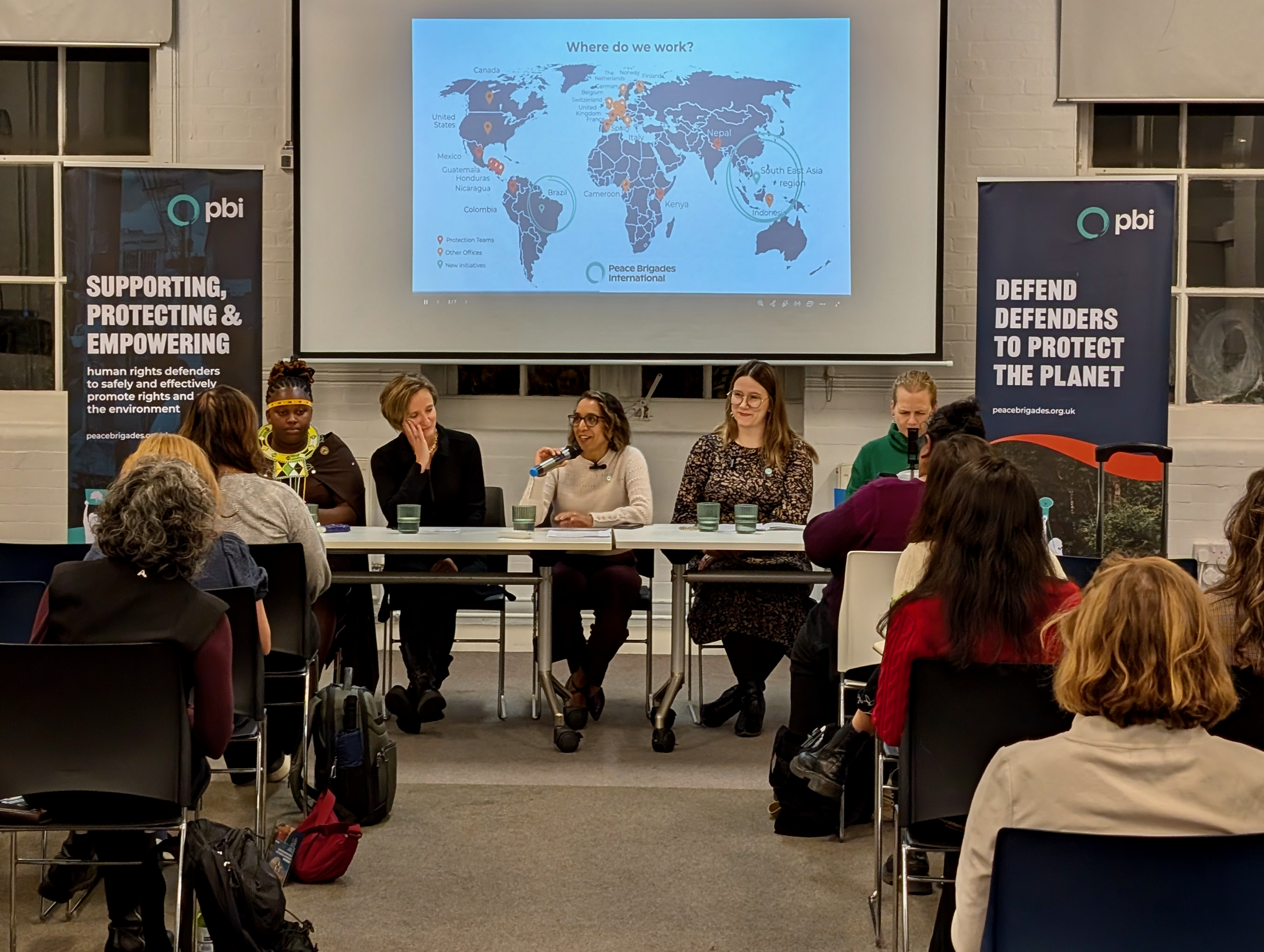
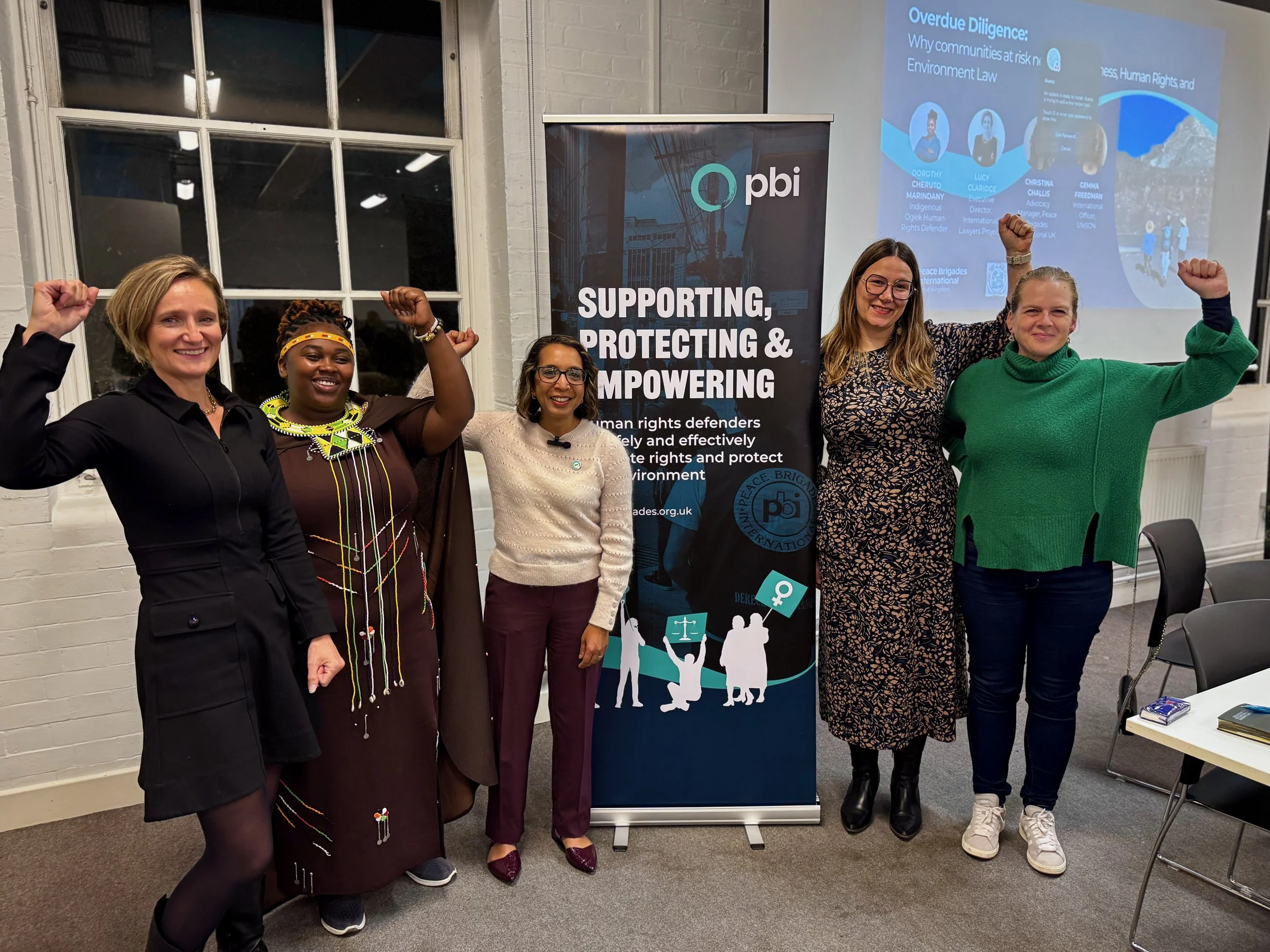
The week ended with an event hosted by PBI UK, bringing together legal experts and campaigners for an evening exploring corporate accountability, Indigenous peoples' rights and the fight to protect communities and the environment.
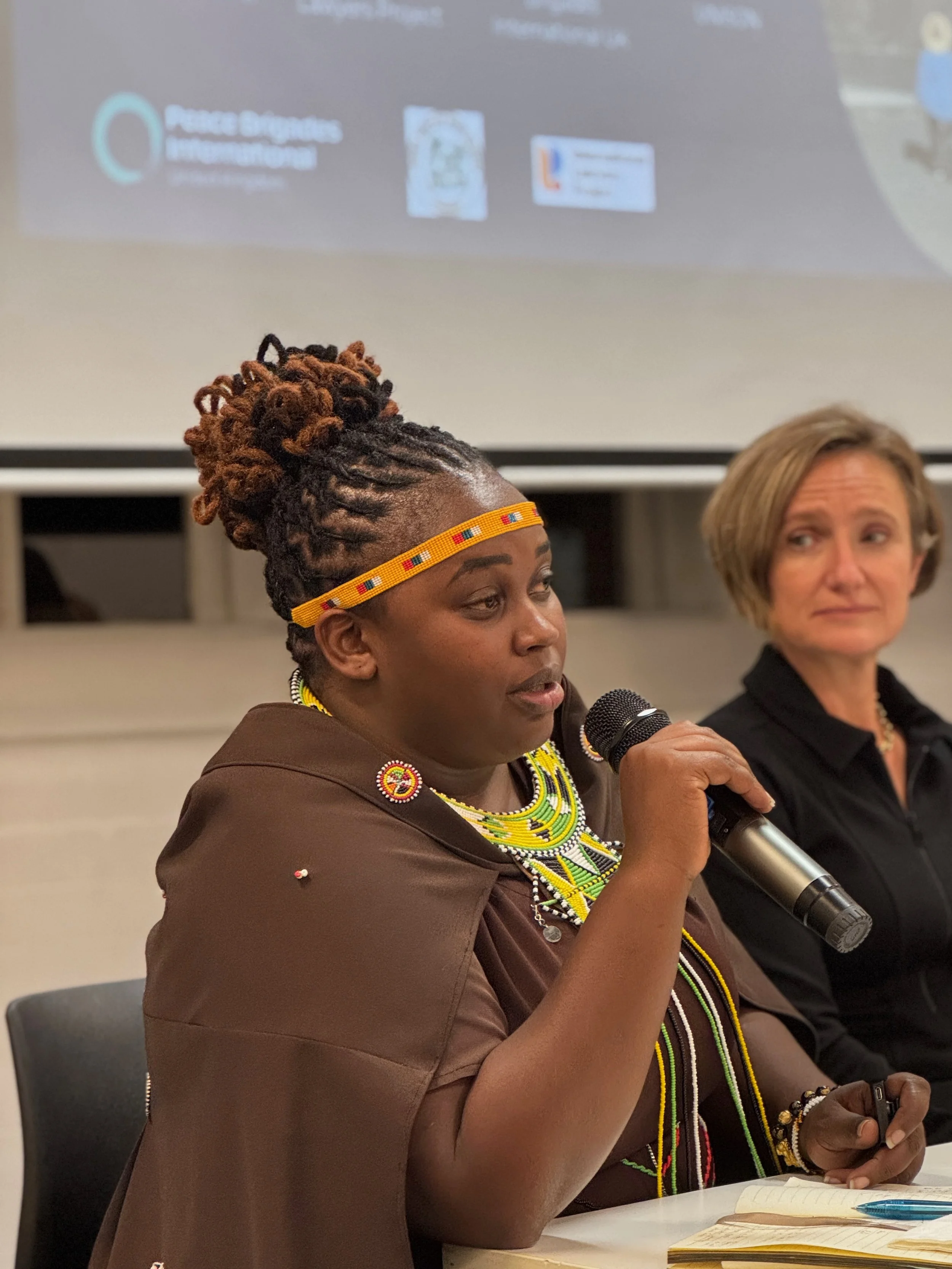
At the heart of the discussion was Dorothy Cheruto’s testimony and perspectives on defending ancestral land and the challenges facing Indigenous communities. Joined by Lucy Claridge of the International Lawyers Project (ILP), Christina Challis, Advocacy Manager at PBI UK and Gemma Freedman of UNISON, the panel explored how companies and governments can be held accountable, how defenders can be better protected, and how the proposed BHREA could prevent harm from happening in the first place. The event also marked the official launch the above-mentioned report.
How can I support PBI and environmental defenders at risk?
Write to your MP: Ask them to sign the Good Business Matters pledge.
Read and share the report: Overdue Diligence shows why human rights defenders still need a UK law on mandatory due diligence.
Sign the petition: Pledge your support for a UK Business, Human Rights and Environment Act.
Stay in the loop: Sign up to the PBI UK newsletter for updates, future events and ways to take action.
Support Defenders at Risk: Donate to Peace Brigades International to help us continue our support of frontline environmental defenders.