Interviewed by Daria Zaporozhets, Programme Support Volunteer
In October 2026, PBI UK welcomed Ogiek human rights defender Dorothy Cheruto Marindany to London to raise awareness of the struggles facing her community. We spoke to Dorothy about the Ogiek people’s relationship with the Mau Forest, the impact of evictions and business activities on their community, and why stronger legislation in the UK is needed to protect Indigenous people and the planet.
Can you please tell us a little bit about you, where you are from, and the work you do?
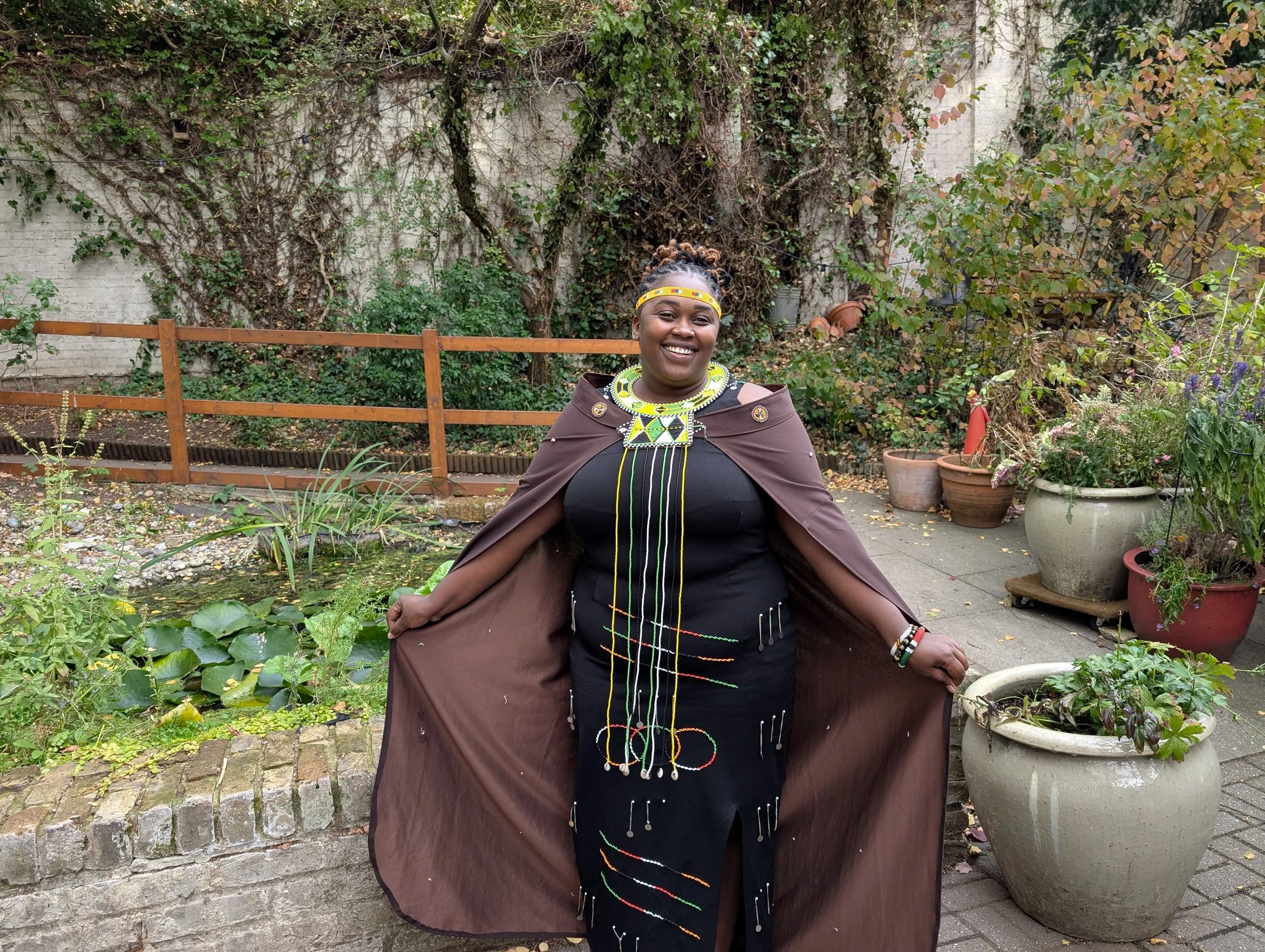
My name is Dorothy Cheruto Marindany. I am Ogiek, born in Tinet, South-West Mau Forest, Nakuru County, Kenya. I am an Indigenous human rights defender working to advance Indigenous Peoples' rights, environmental justice and gender equality. I serve as Assistant Gender Officer at the Ogiek Peoples' Development Program (OPDP) and coordinate the Hunter Gatherer Forum-Kenya (HUGAFO-K), supporting Indigenous communities to defend their ancestral lands, strengthen women's leadership and preserve their cultures.
Ogiek people live across six counties in Kenya: Narok, Nakuru, Kericho, Uasin Gishu, Nandi and Baringo. According to the 2019 census, the Ogiek population is approximately 52,000, including Ogiek communities from the Mount Elgon region, known as the Ogiek of Chepkitale.
Ogiek people are forest people and, to us, the land means survival. Our land and forest are tied to our traditions and cultures. It is simply our life. That is where we get our resources, food, water and medicine, and where we hold our cultural ceremonies.
What made you become a human rights defender?
What motivated me is my concern for women and young people. Too often, their voices are suppressed. At decision-making tables you usually see elders and men, while women and young people are expected to follow decisions that have already been made. I want to see women standing up and speaking for themselves. Why shouldn’t they? My biggest motivation is to empower women economically, socially and mentally. Their voices belong at the table.
I have also experienced the struggles young people face in accessing education. Getting through school and university was a miracle for me because I never knew whether I would have the money to pay my fees. Through my work with the OPDP, and together with The Director, Daniel Kobei, we have sponsored over 30 students through secondary education and, recently, five through college and university.
Change does not always begin with big things. Sometimes it begins with giving a woman the confidence to speak in a meeting, supporting a young person to complete school or standing beside someone whose rights have been violated.
What has changed for the Ogiek in recent years, and who or what is driving those changes?
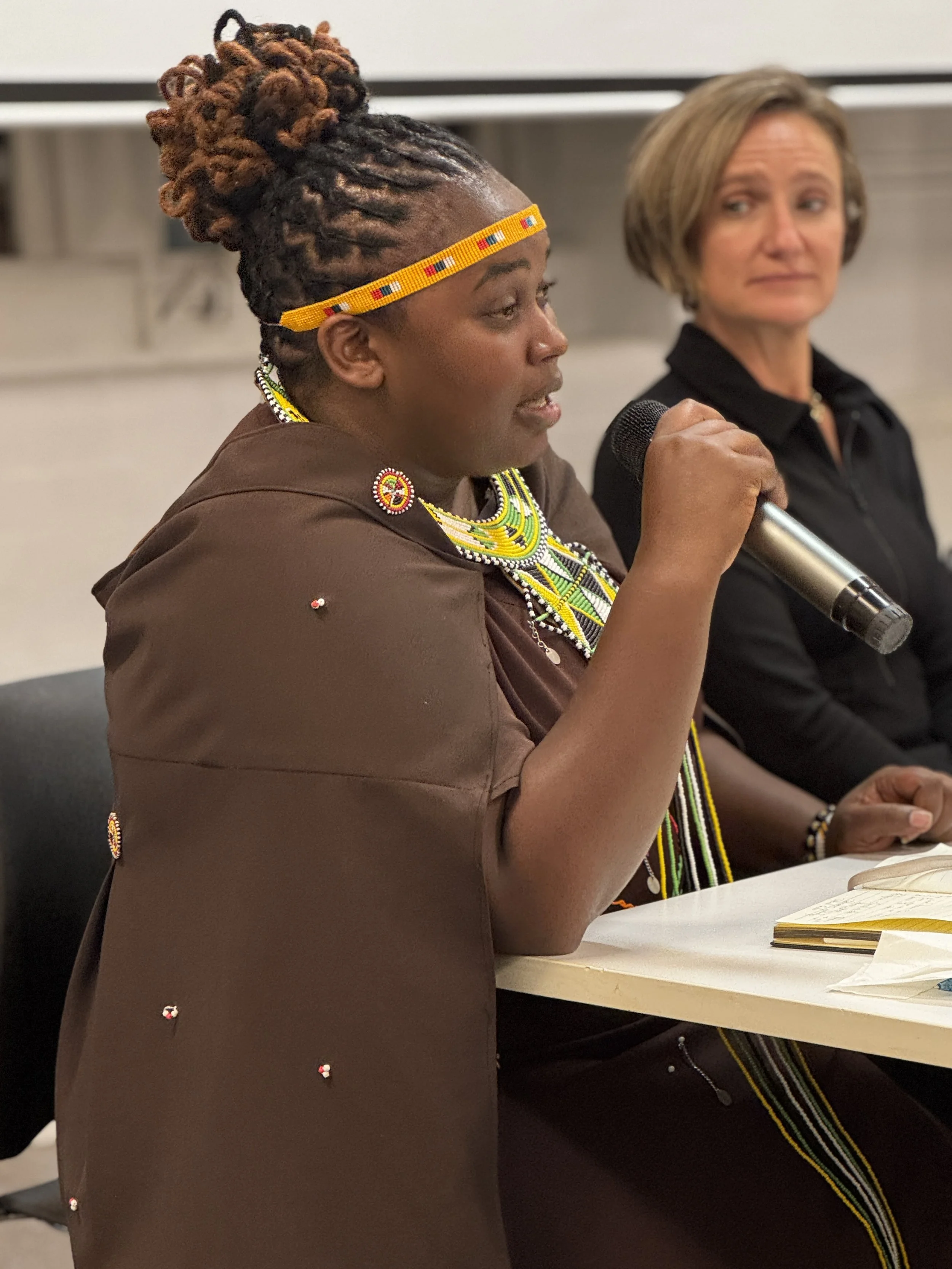
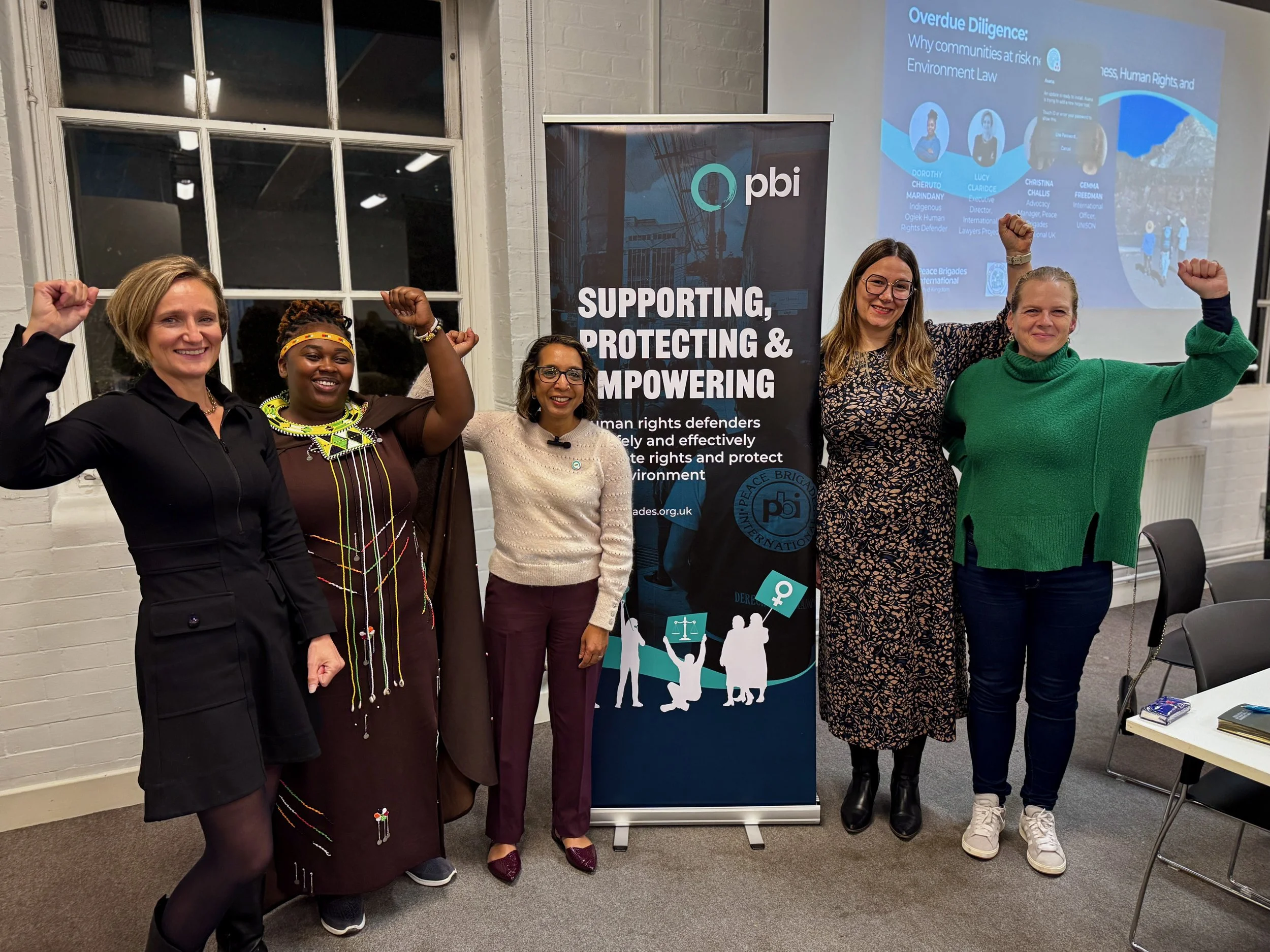
Dorothy speaking at PBI UK’s supporter event alongside Lucy Claridge, Executive Director of the International Lawyers Project
There has been increased displacement, evictions, cultural erosion, social and health crisis and vulnerability among women, youth, physically challenged and elderly people in our community. The forest is shrinking due to conservation measures being introduced on our land, and communities are being forced to adopt new approaches rather than our own traditional knowledge, which is very sustainable. These measures have led to evictions, displacement and the destruction of livelihoods.
We also face social and health crises. Our culture and traditions are being eroded, and young people are learning dominant languages and losing our own. Our language is not only a way to converse; it carries vital information within the community. You cannot separate conservation and language. Trees that are vital for water conservation, biodiversity, our beehives, food and medicine have names found only in the Ogiek language. Once young people lose that language, we risk losing the knowledge, and the trees themselves.
In August 2025, OPDP conducted a fact-finding study to assess the socioeconomic and psychosocial impact of the November 2023 evictions in Sasimwani. The study found that approximately 45% of school-aged children dropped out of school. This is only one section of Mau Forest, so you can imagine the situation across the six counties where Ogiek people live.
how have these changes affected women and girls in particular?
Evictions have placed a heavy burden on Ogiek women, who are often left to provide for their children alone. Women affected by the 2023 evictions in Sasimwani told us about family fragmentation, domestic violence, difficulty meeting basic needs, and unplanned pregnancies despite using family planning.
What worries me most is the next generation. Children may stay home to care for younger siblings instead of attending school, and some young people become so desperate to provide for their families that they turn to prostitution. We are seeing more school dropouts and serious mental health struggles, including cases of suicide
Can you tell us about one person or family whose life has been affected? What happened to them?
The most recent eviction of the Ogiek from their ancestral land was in Sasimwani in November 2023, carried out by the Kenya Forest Service (KFS). Houses were burned, people chased away and property looted. This was immediately after the climate summit in Nairobi, when everyone wanted to be a champion of conservation.
In 2025, the Ogiek Peoples’ Development Program (OPDP) supported a fact-finding mission to understand how the evictions had affected people’s lives. I met a single mother who had been evicted with her children. She has a severe disability, with both hands amputated. Her daughter had completed secondary school but could not continue her education beyond that because of school fees and displacement. The mother later injured her leg working on a potato farm and could not afford treatment. She told me: “I feel like life is no longer meaningful to me. I think the best thing that can happen to me right now is just to die because I can no longer provide for my kids.”
Her story represents the human face of these evictions: disrupted families, children denied opportunities and livelihoods taken away.
How do business interests affect your community's land and rights? When harm is caused, is anyone held to account?
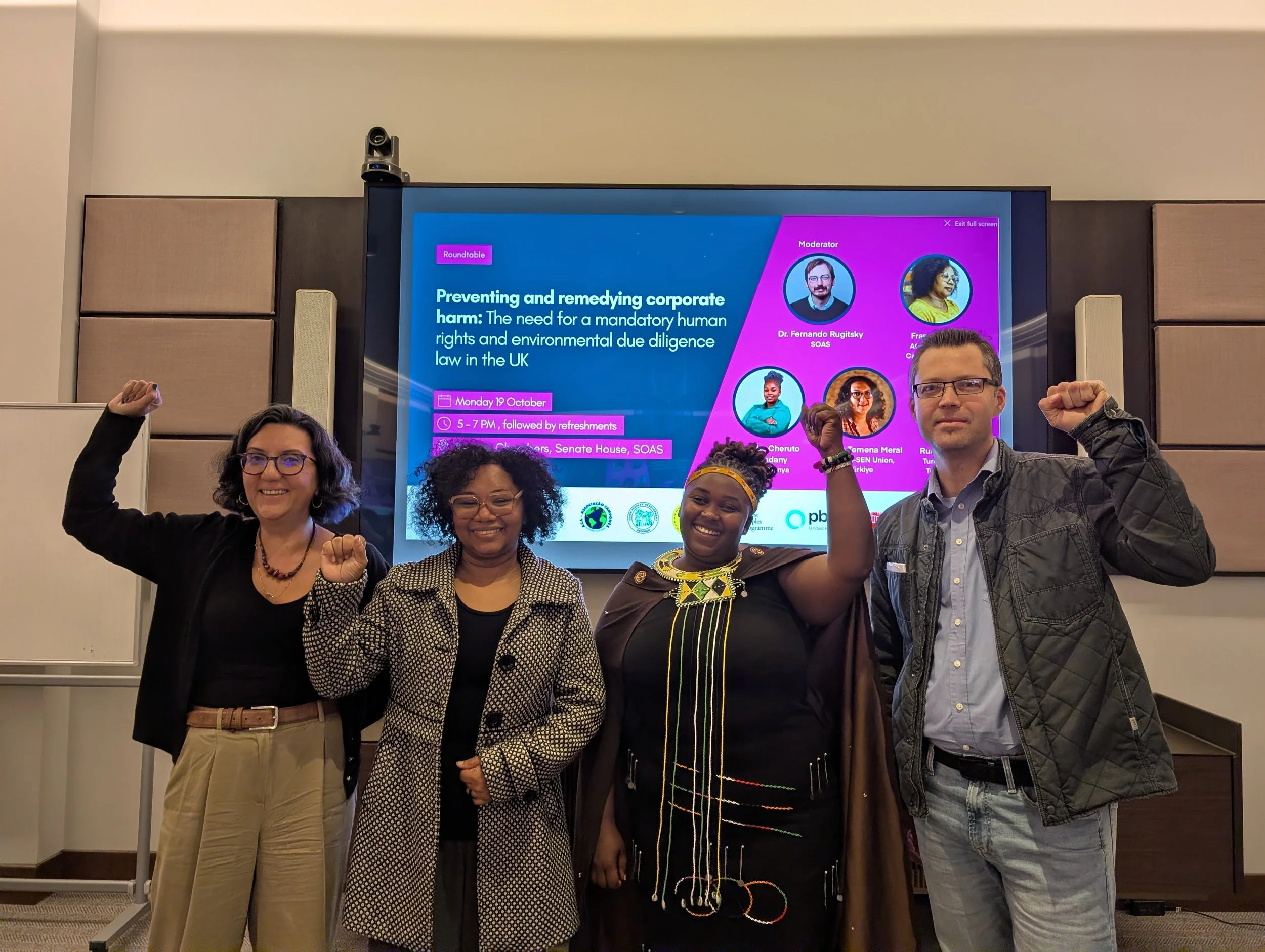
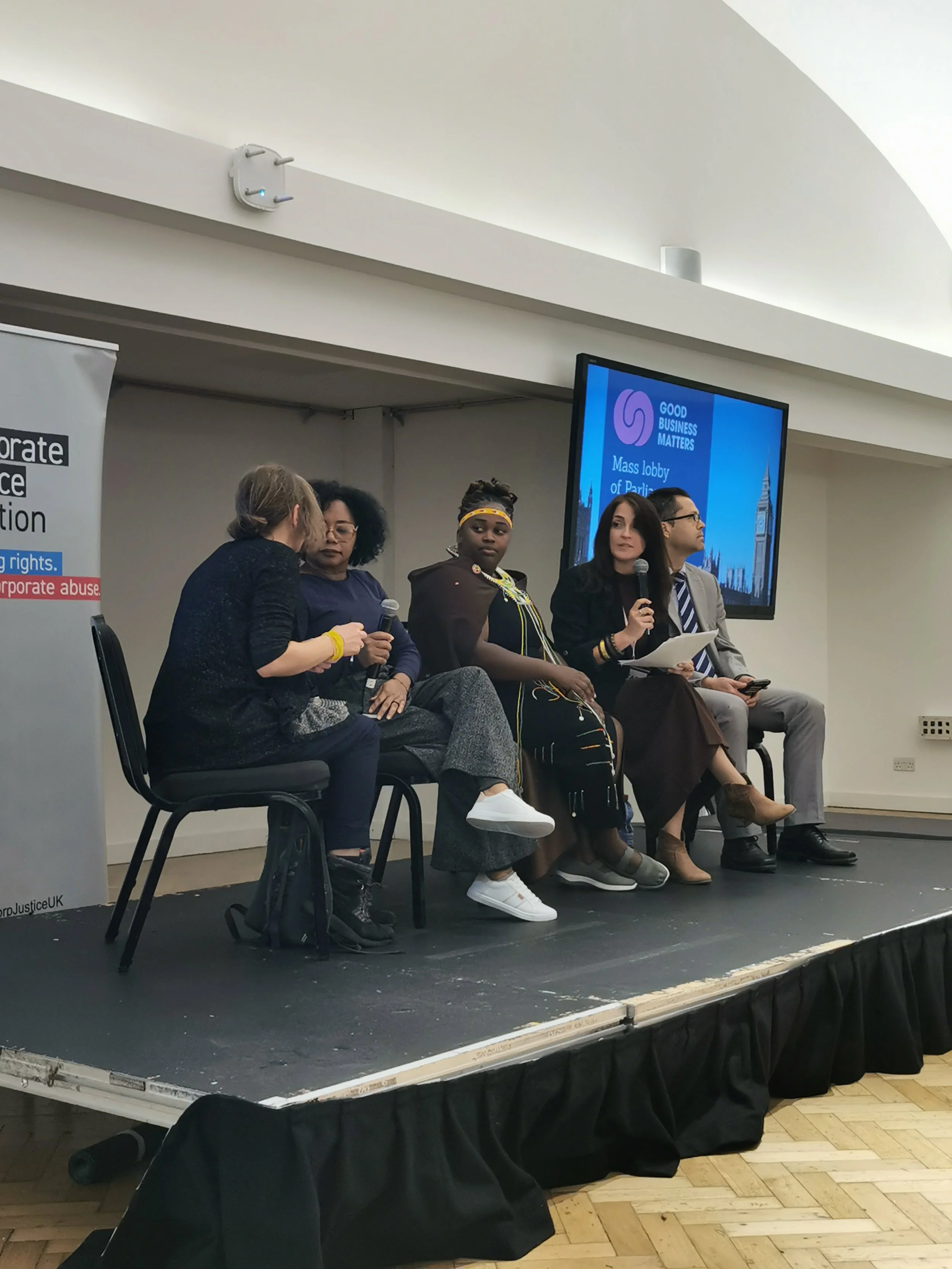
Dorothy joins human rights defenders from Turkey, Brazil and Turkmenistan in speaking up for corporate responsibility
Business activity has really affected our ability to stay on our ancestral land, leading to our eviction and displacement. It has destroyed our livelihoods and eroded our culture and traditions. Most of our community now lives outside the forest, where we can no longer practice our cultural ceremonies or harvest medicinal plants. Living in makeshift houses with poor drainage also exposes people to diseases, including respiratory illnesses.
Kenya is a democratic country, which means it should be a government for the people, by the people. When the government sides with those responsible for conservation practices that harm the Ogiek, we feel that it does not care about our voices or the people who vote to represent them. We urge the government to put its own citizens at the forefront of every discussion. Before you look beyond your borders, take care of your home first.
Logging, charcoal burning and carbon credit projects around our territories, together with conservation activities, have led to evictions and displacement. Many Ogiek families now live in makeshift shelters outside the forest, and we have lost access to our ceremonies, medicinal plants and traditional foods.
We are not against development or conservation. We demand that our rights are respected, that those operating in our territories are held accountable for harm, and that Indigenous communities are meaningfully involved in decisions affecting our land.
What does conservation look like when Indigenous communities lead it?
Conservation becomes much more effective when Indigenous people lead it. It is a collective effort, where the forest exists to take care of the people, and people exist to take care of the forest. Conservation should not mean protecting the forest from people.
Indigenous peoples practised real environmental conservation long before today’s “climate solutions”. Their way of life was built on reuse, respect for nature and taking only what was necessary. They made water containers from plants that decomposed naturally, used no chemicals in farming and shared seeds among community members and neighbours. The thick forest made pollination easier, as birds carried seeds from place to place, and trees grew tall enough to support our beehives, providing honey, our staple food and essential to all our ceremonies.
Conservation led by Indigenous people is true conservation.
What has the Ogiek achieved through collective organising?
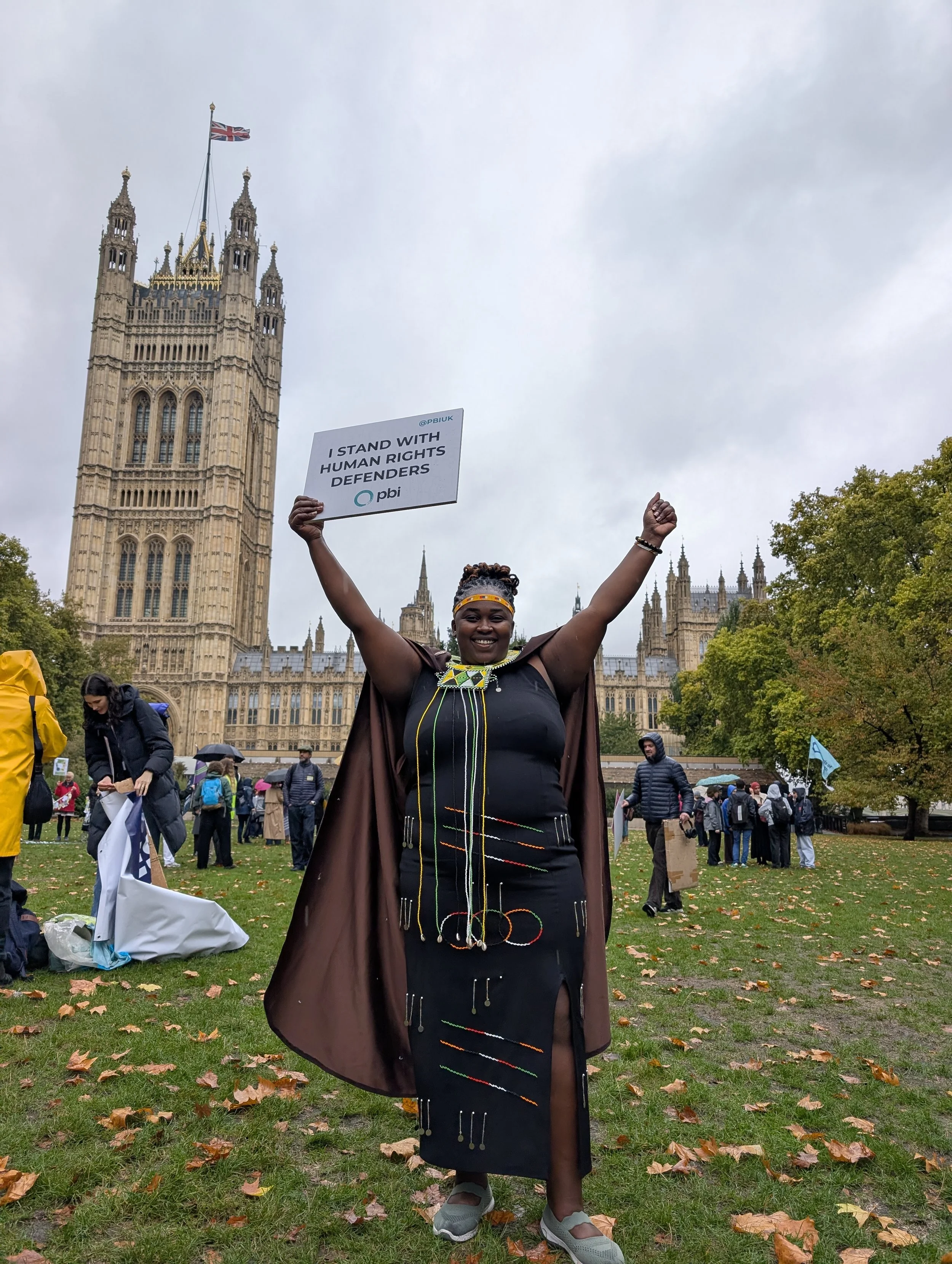
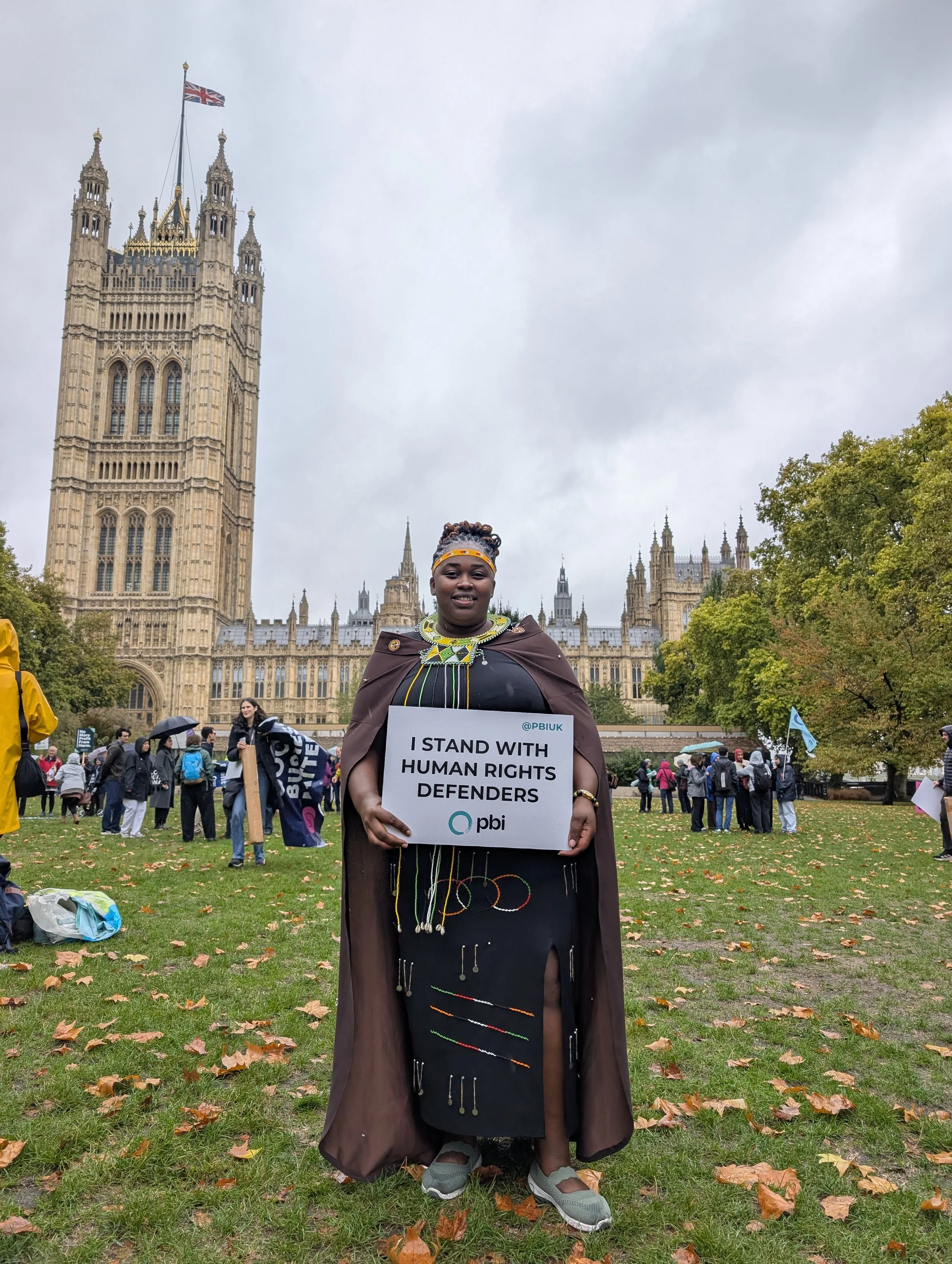
Dorothy taking part in the Good Business Matters Mass Lobby Day
Our achievements are not the work of one organisation or a few individuals; they are the result of years of collective effort by community members, elders, women, youth, partners and human rights defenders. One major achievement was the 2017 judgment of the African Court on Human and Peoples’ Rights in favour of the Ogiek against the government of Kenya. In 2022, we won another victory with the Court’s reparations judgment, which set out measures the government must implement, including returning our community land and providing compensation for moral and property damage.
The Ogiek community representatives travelled to the African Commission and African Court to give first-hand testimony. The council of elders provided constant guidance to the community and OPDP. Women composed songs about conservation to motivate our people to keep struggling for our land rights, and young people have supported with visibility to ensure everyone knows that the Ogiek exist.
We have also established the Ogiek Centre in Narok County, which brings Ogiek people from all six counties together each year to reconnect with our culture. It has a tree nursery, a museum preserving our artefacts and a space for young people to learn from elders.
Another achievement is the Hunter Gatherer Forum Kenya (HUGAFO-K), a network hosted by the OPDP since 2019 that brings together nine hunter-gatherer communities and 23 member organisations to amplify their voices. All of us struggle with land tenure insecurity and a lack of legal recognition, so we have been advocating heavily for this. Legal recognition would support our claims to communal lands and the distribution of resources all through our communities.
We still have a long way to go, particularly in ensuring that the court judgments are fully implemented and that our ancestral land rights are respected. But organising together has given us hope, visibility and the strength to keep going.
What risks do the forest scouts and others face for speaking out or protecting the forest?
Forest scouts face many risks for speaking out and protecting the Mau Forest. Some have experienced intimidation and arrests, and have been implicated in crimes they did not commit. There have also been incidents in which KFS personnel have injured or killed people in the forest. These experiences leave scouts and their families frustrated and mentally exhausted, and they face costly court cases. Forest scouts need more support, including risk assessment training, financial support for their households, monitoring equipment, psychosocial support and emergency funding in cases of arrest.
What drives you to continue your work as a human rights defender?
What keeps me going is the hope that one day we will return to our ancestral land and live with the dignity, freedom and security that our people once enjoyed.
Sometimes I ask myself whether I will personally live long enough to see that day, because the struggle has taken so many years and may take even longer. But this fight is bigger than me. Even if I do not return to our land in my lifetime, I want our children and grandchildren to have that opportunity. I want future generations to know where they come from and grow up connected to their land and culture. I want them to inherit a thriving forest, not just hear stories about one that their grandparents once called home.
That is what keeps me going. We are not fighting only for ourselves. We are fighting for the generations yet to come
Why have you come to London, and what do you want UK decision-makers to hear?
I came to London because there are strong calls to introduce a Business, Human Rights and Environment Act. Businesses and supply chains operate across borders, and the UK may benefit from businesses that violate human rights in countries like Kenya.
Carbon credit and logging companies have become a major concern for the Ogiek of Mau Forest. We do not always know who funds these projects, and we often only encounter brokers who come in the name of conservation without meaningful consultation. If those responsible for harm are connected to the UK, such a law could help hold them accountable, including in countries like ours, where access to justice can be limited.
We also urge the UK government, given its relationship with Kenya, to encourage the Kenyan government to implement the Ogiek Court judgments so that we can enjoy our rights like any other Kenyan citizen.
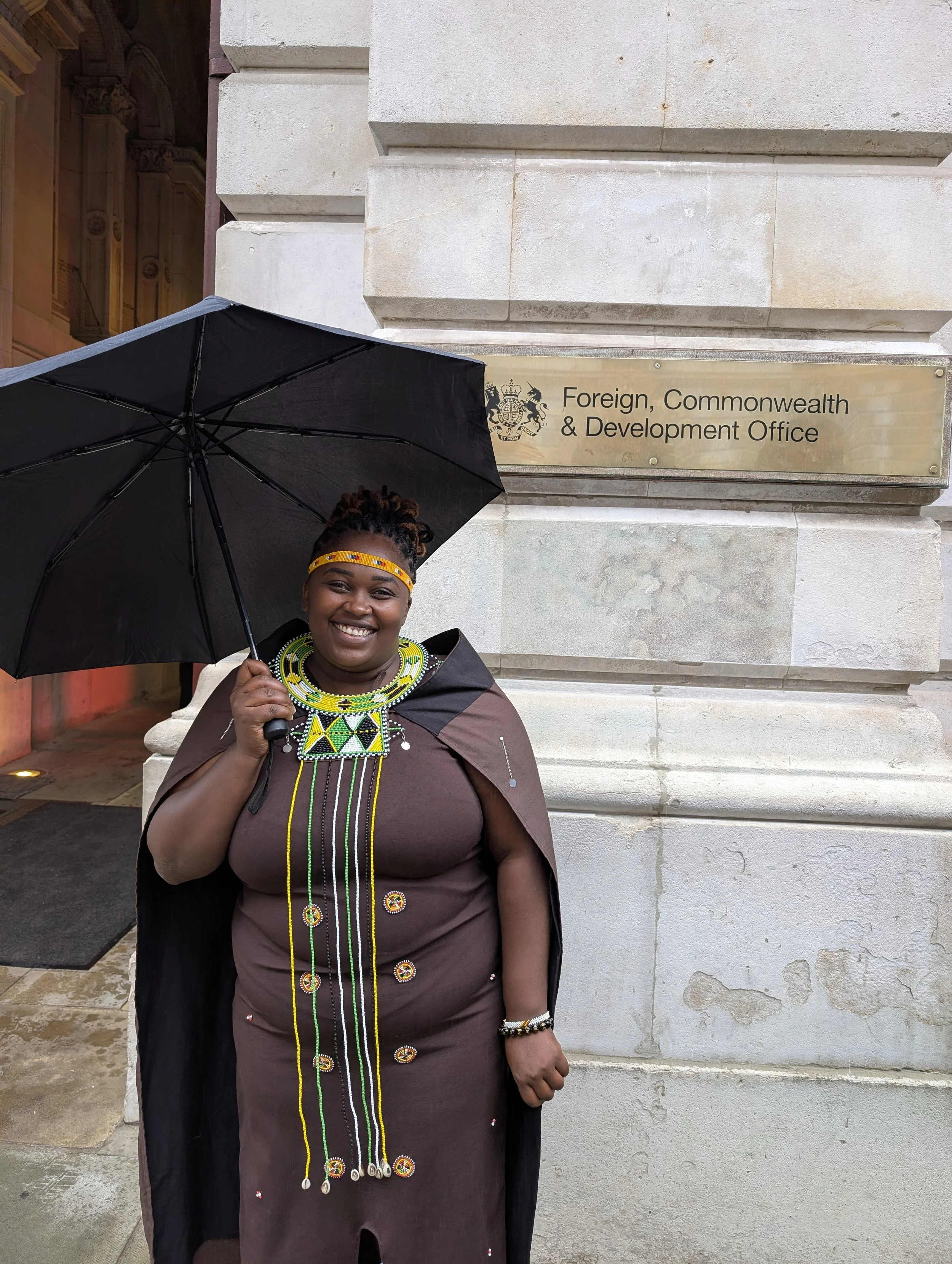
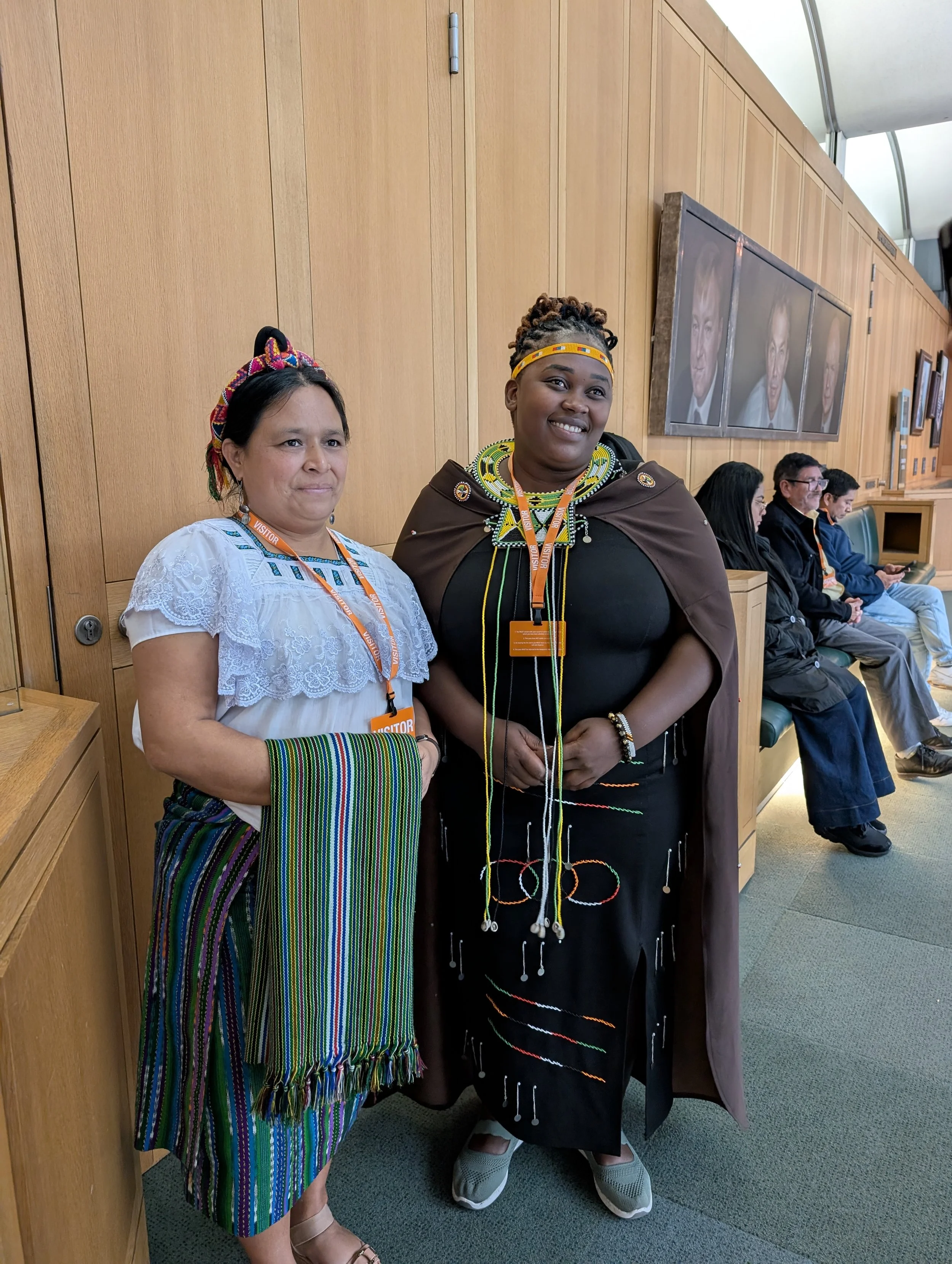
Dorothy at the Foreign, Commonwealth & Development Office (FCDO)
How would a law like this change communities like yours?
A law like this would help protect our ancestral land and ensure that communities have a say in decisions affecting their lives, resources and future.
One of the biggest changes would be ensuring meaningful Free, Prior and Informed Consent (FPIC). Communities must be consulted before any project is introduced on their land, given relevant information in a language they understand and adequate time to decide without intimidation or manipulation, and have a genuine opportunity to accept or reject it.
What would you say to someone who isn't sure this law is needed?
This potential law is very important to us, but only if it includes clear consequences for businesses that fail to comply and do their due diligence. If these consequences are clearly set out in the proposed law, I believe it will protect us, our mother land and other Indigenous and minority communities across all borders.
Call to Action
If this interview inspired you to support human rights defenders like Kenia and Dunia, there are several ways you can contribute to the cause:
Take a few minutes to write to your MP to ensure the UK government’s support for human rights defenders like Dorothy.
Donate to PBI UK to support our advocacy and protective accompaniment for human rights defenders at risk, and sign up to PBI UK’s quarterly newsletter to stay in the loop.
Consider volunteering in the field as part of PBI’s protective accompaniment work.